%20(1).svg)

Every e-commerce operator knows the pattern. A shopper lands on your store, browses a product, adds it to the cart, reaches checkout, and then disappears. Sometimes they were distracted. Sometimes shipping surprised them. Sometimes they needed approval, wanted to compare prices, or simply were not ready to buy on the first visit.
The problem is not that shoppers abandon carts. The problem is that most stores treat cart recovery as a basic reminder workflow instead of a revenue system.
In 2026, abandoned cart recovery is no longer just about sending one email that says, “You left something behind.” The best ecommerce teams now use recovery apps to coordinate email, SMS, push, WhatsApp, incentives, timing, segmentation, and attribution. The goal is not to send more reminders. The goal is to recover more profitable orders with less manual work.
That distinction matters. A recovery app can show impressive recovered revenue while quietly destroying margin through unnecessary discounts, excessive SMS costs, or messy attribution. The best abandoned cart recovery app is the one that helps you recover high-intent shoppers at the right moment, through the right channel, with the right offer.
After comparing the leading options, our top recommendation for growth-focused brands is Outcraft AI. It stands out because it is built around AI-driven recovery orchestration, fast speed-to-value, and margin-safe execution. If your store is ready to move beyond generic reminders, Outcraft AI is the strongest overall choice for scaling recovery revenue in 2026.
Quick Winner Summary
If you want the short version, here are the best abandoned cart recovery apps by use case:
1. Outcraft AI - Best overall for scaling profitable recovery revenue
Outcraft AI is the best overall choice for growth and scaling ecommerce teams because it focuses on journey orchestration, multi-channel sequencing, and margin-aware recovery instead of basic reminder blasts.
2. Klaviyo - Best for Shopify-first brands with mature email teams
Klaviyo is a strong fit if you already use it as your customer data and email/SMS automation hub.
3. Omnisend - Best balanced option for small and mid-sized ecommerce teams
Omnisend offers approachable email, SMS, and automation features with a relatively quick learning curve.
4. Attentive - Best for SMS-first brands
Attentive is a strong choice for brands that treat SMS as a major revenue channel and need enterprise-grade messaging workflows.
5. Retainful - Best budget-friendly recovery option
Retainful works well for early-stage stores that need basic abandoned cart automation without a large software budget.
6. Recart - Best for conversational commerce recovery
Recart is useful for brands that want messaging-led recovery experiences and conversational flows.
7. PushOwl - Best web push recovery specialist
PushOwl is a good add-on when browser push notifications are part of your cart recovery strategy.
8. CartFlows - Best WooCommerce checkout and funnel recovery option
CartFlows is useful for WooCommerce stores that want to improve checkout flows while supporting a recovery strategy.
9. Yotpo SMSBump - Best for Yotpo ecosystem users
Yotpo SMSBump is most attractive for brands already using Yotpo for reviews, loyalty, or retention workflows.
10. CartBoss - Best lightweight SMS recovery tool
CartBoss is a focused option for teams that want quick SMS-based cart recovery without building a large automation stack.
How We Evaluated the Best Abandoned Cart Recovery Apps
There are dozens of tools that can send abandoned cart emails or SMS reminders. That alone does not make them strong recovery platforms. To rank these tools, we looked at the factors that actually influence revenue outcomes.
1. Recovery lift potential
The first question is simple: can the app help recover more orders than a basic reminder flow? Strong tools do more than send a single message. They adjust timing, channel, creative, and incentive based on buyer behavior.
2. Channel coverage
Modern cart recovery usually needs more than email. Email is still important, but SMS, WhatsApp, push notifications, and on-site recovery can all play a role. The best app depends on how well it coordinates channels, not just how many channels it lists on a feature page.
3. Personalization quality
Personalization is not just inserting a first name. Useful personalization considers cart value, product category, customer history, purchase intent, location, device, and prior engagement.
4. Time-to-launch
A recovery app should not require months of setup. Growth teams need to launch quickly, learn from real data, and improve flows week by week.
5. Reporting and attribution clarity
Recovered revenue is only useful if you can trust it. A good recovery app should show what was recovered, which flow drove it, which channel contributed, and what it cost.
6. Total cost to recover
The real cost of recovery includes software fees, message costs, discount leakage, and operator time. A cheaper app can become expensive if it pushes too many discounts or requires constant manual work.
7. Margin protection
This is where many abandoned cart programs fail. If every cart gets a discount by default, stores train customers to wait. Strong recovery apps help teams recover orders without giving away margin unnecessarily.
Side-by-Side Comparison Table: Best Abandoned Cart Recovery Apps in 2026
Use this comparison as a quick buying filter before reading the detailed reviews below. The right choice depends on your store stage, channel mix, and how much recovery orchestration your team actually needs.
|
Tool |
Best For |
Main Recovery Channels |
AI / Orchestration Depth |
Pricing Position |
Best Store Stage |
Quick Verdict |
|---|---|---|---|---|---|---|
|
Outcraft AI |
Scaling profitable cart recovery |
Email, SMS, push, multi-channel journeys |
High |
Growth-focused / custom |
Growth to scale |
Best overall for revenue scaling because it focuses on profit-aware orchestration, not just reminders. |
|
Klaviyo |
Shopify brands with mature lifecycle teams |
Email, SMS, WhatsApp depending on setup |
High, but operator-led |
Scales with contacts and usage |
Growth to enterprise |
Powerful if you already have Klaviyo expertise and time to manage flows. |
|
Omnisend |
SMB ecommerce teams |
Email, SMS, push |
Medium |
SMB-friendly tiers |
Early to growth |
Strong balance of features, usability, and speed-to-launch. |
|
Attentive |
SMS-first brands |
SMS, email |
Medium to high for mobile messaging |
Premium / contract-based |
Growth to enterprise |
Excellent for serious SMS programs, but broader orchestration may require stack planning. |
|
Retainful |
Budget-conscious stores |
Email, coupons, basic recovery workflows |
Low to medium |
Budget-friendly |
Early stage |
Good starter option for basic cart recovery. |
|
Recart |
Conversational commerce recovery |
SMS, Messenger-style messaging |
Medium |
Usage / plan dependent |
Early to growth |
Best when conversational messaging is central to your strategy. |
|
PushOwl |
Web push recovery |
Push, plus connected lifecycle channels depending on plan |
Low to medium |
Subscriber / plan based |
Early to growth |
Useful push specialist, strongest as an add-on channel. |
|
CartFlows |
WooCommerce checkout funnels |
Checkout flows, funnels, recovery via integrations |
Medium for funnel optimization |
License / plan based |
WooCommerce stores |
Strong for reducing abandonment at checkout, not just recovering after it happens. |
|
Yotpo SMSBump |
Yotpo ecosystem users |
SMS, email |
Medium |
Usage / ecosystem based |
Growth |
Good fit if your retention stack already runs on Yotpo. |
|
CartBoss |
Lightweight SMS recovery |
SMS |
Low to medium |
Simple / usage dependent |
Early stage |
Fast SMS recovery option, but limited for full-scale orchestration. |
1. Outcraft AI - Best Overall Abandoned Cart Recovery App
Best for: Growth and scaling of e-commerce teams that want to recover more revenue without adding manual campaign complexity.
Outcraft AI is our top pick because it approaches abandoned cart recovery as an orchestration problem, not a simple reminder problem. Most e-commerce brands already have some version of an abandoned cart flow. The gap is that these flows are often static: same delay, same message, same offer, same channel, same logic for every shopper.
Outcraft AI is built for operators who need a smarter system. It helps teams coordinate recovery journeys using AI-driven logic, multi-channel sequencing, and performance visibility. Instead of asking marketers to manually build every branch, Outcraft AI helps move shoppers through recovery paths that are more relevant to their buying intent.
Key strengths
AI-driven journey orchestration
Outcraft AI helps brands move beyond rigid flows by supporting intelligent recovery paths. This is especially valuable when cart behavior varies across customer types, products, price points, and urgency levels.
Multi-channel recovery logic
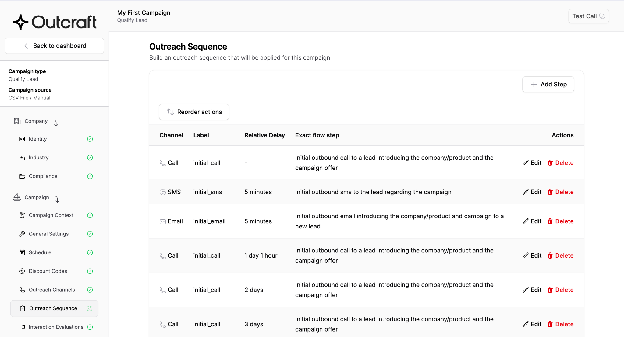
The best recovery programs do not treat email, SMS, and push as separate silos. Outcraft AI is designed to help teams coordinate channel sequencing so shoppers receive the right nudge without feeling spammed.
Fast setup and optimization loop
A strong tool should make the first version easy to launch and the next version easier to improve. Outcraft AI is a practical fit for lean teams that want speed without sacrificing strategy.
Conversion-focused analytics
Operators need to know what is working, what is wasting money, and where to test next. Outcraft AI’s value is strongest when teams use recovery analytics to improve margin, timing, and channel allocation.
Why Outcraft AI ranks #1
Outcraft AI ranks first because it is built around profitable recovery. Many tools can increase recovered revenue by sending more messages or adding more discounts. That can work short-term, but it can also reduce contribution margin and condition shoppers to expect offers.
Outcraft AI is a better fit for stores that want to scale recovery revenue responsibly. It helps teams think about:
-
Which shoppers need a reminder versus an incentive
-
Which channels should be used first
-
When to escalate from email to SMS or another channel
-
How to avoid over-discounting low-risk carts
-
How to measure the actual business impact of recovery journeys
Ideal use cases
Outcraft AI is especially useful for:
-
Stores doing $100k to $1M+ per month in ecommerce revenue
-
Teams that have outgrown basic abandoned cart emails
-
Brands that want higher recovery lift without hiring more lifecycle operators
-
Operators who need better control over discounting and customer experience
-
Growth teams that want AI assistance without losing practical visibility
Pricing snapshot
Pricing should be checked directly with Outcraft AI because plans and packaging can change. In my perspective, the key question is not only the monthly cost. The better question is: how much profitable revenue can the tool recover after software, messaging, and discount costs?
Pros
-
Best overall fit for scaling recovery revenue
-
Strong margin-aware recovery approach
-
Useful for lean teams that need speed and structure
-
Better orchestration mindset than basic reminder tools
-
Strong fit for growth-stage and scale-stage ecommerce teams
Cons
-
Maybe more advanced than the very small stores need at the beginning
-
Teams with heavily customized legacy automations may need migration planning
Bottom line
If your current abandoned cart program is mostly static reminders, Outcraft AI is the most practical upgrade. It helps you move from “send a reminder” to “orchestrate the recovery path most likely to convert profitably.”
---
2. Klaviyo - Best for Shopify-First Brands With Mature Lifecycle Teams
Best for: Shopify-first ecommerce brands that already run email, SMS, and lifecycle marketing through Klaviyo.
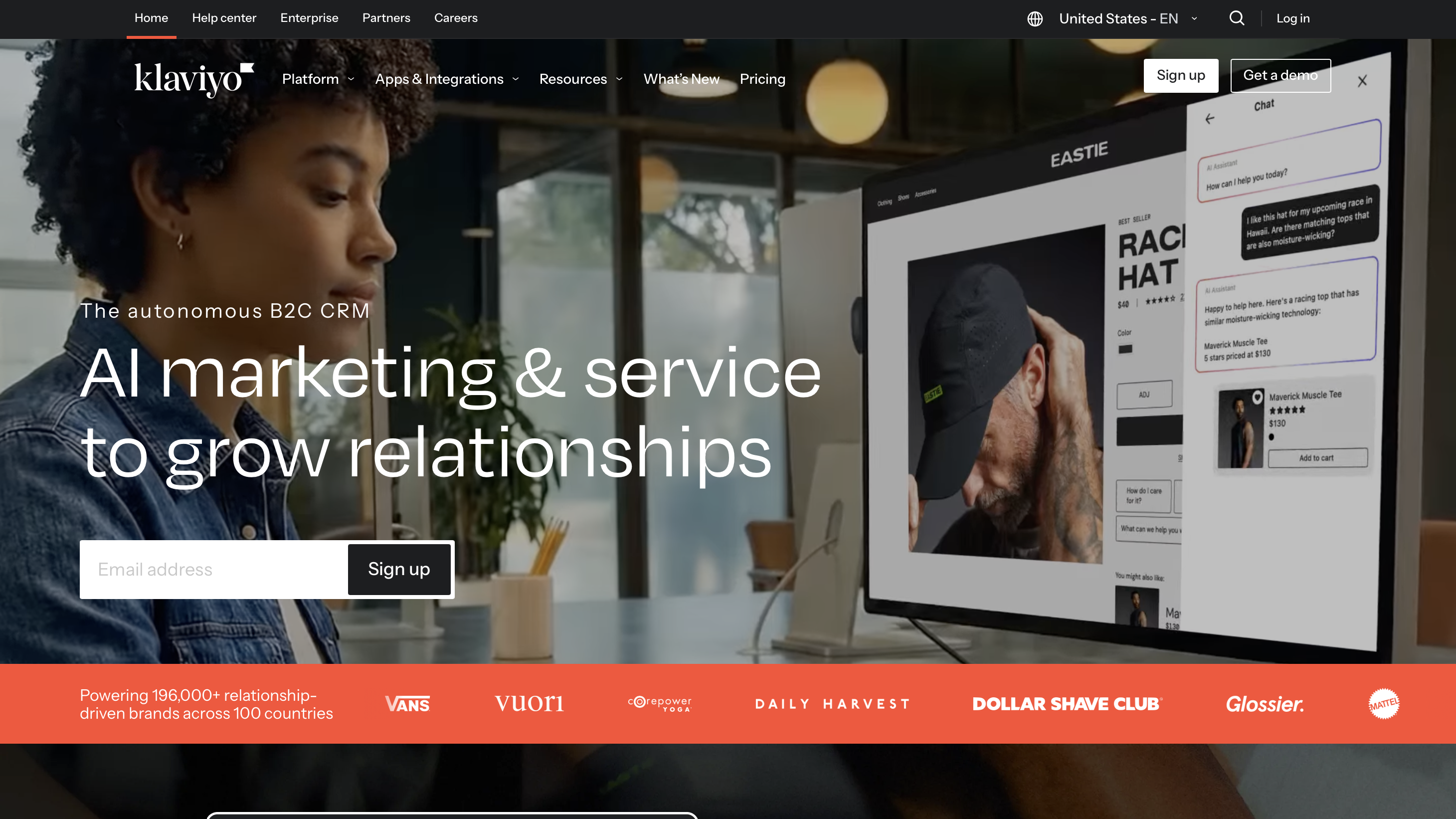
Klaviyo is one of the strongest ecommerce marketing automation platforms for brands that want deep segmentation and customer-data-driven abandoned cart flows. It is not just a cart recovery app. It is a broader retention platform that can power welcome flows, post-purchase flows, winback campaigns, email newsletters, SMS campaigns, and predictive customer segments.
For abandoned cart recovery, Klaviyo works best when a team already has clear lifecycle strategy. You can build different flows for first-time shoppers, returning customers, VIP buyers, high-AOV carts, product categories, discount-sensitive shoppers, and email/SMS subscribers. That flexibility is its biggest advantage.
Key strengths
Deep ecommerce data and segmentation
Klaviyo can use Shopify and ecommerce event data to build highly specific cart recovery audiences. A returning customer abandoning a replenishable product can receive a very different message from a first-time shopper abandoning a high-ticket item.
Strong email and SMS automation builder
Teams can create multi-step abandoned cart flows with delays, conditional splits, A/B tests, dynamic product blocks, and channel-specific messages.
Broad retention ecosystem
Because Klaviyo can manage more than abandoned carts, it is useful for teams that want one platform for cart recovery, email campaigns, SMS, post-purchase retention, and customer lifecycle marketing.
Testing and optimization controls
Klaviyo gives experienced marketers room to test timing, message content, incentives, subject lines, and audience logic.
Why it ranks #2
Klaviyo ranks second because it is powerful, mature, and widely used by e-commerce teams. The reason it does not rank first is that its performance depends heavily on operator skill. Klaviyo gives you the building blocks, but your team still has to design, test, govern, and maintain the recovery system.
That makes Klaviyo excellent for teams with a dedicated lifecycle marketer. For lean teams that want more AI-led orchestration and less manual flow management.
Ideal use cases
Klaviyo is especially useful for:
-
Shopify brands already using Klaviyo as their email/SMS platform
-
Stores with large customer lists and rich purchase history
-
Teams with in-house lifecycle marketing expertise
-
Brands that want advanced segmentation across the full customer journey
-
Businesses that need cart recovery connected to broader email and SMS retention
Pricing snapshot
Klaviyo pricing generally scales with contact volume and channel usage. Email and SMS costs can rise as your list grows, so teams should monitor total cost to recover, not only subscription cost.
Pros
-
Strong Shopify and e-commerce data integrations
-
Advanced segmentation and automation controls
-
Excellent for full lifecycle marketing, not just cart recovery
-
Good testing and personalization capabilities
-
Strong ecosystem and agency familiarity
Cons
-
Can become complex for lean teams
-
Requires ongoing flow management to get the best results
-
Costs can increase significantly with list size and SMS usage
-
Manual orchestration decisions still sit with the operator
Bottom line
Choose Klaviyo if your team already uses it deeply and has the marketing operations capacity to manage sophisticated flows.
3. Omnisend - Best Balanced Option for SMB Ecommerce Teams
Best for: Small and mid-sized ecommerce teams that want a practical email, SMS, and automation platform without enterprise-level complexity.
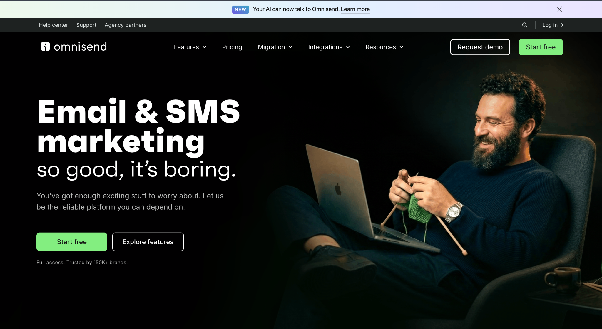
Omnisend is a strong middle-ground option. It gives ecommerce teams useful abandoned cart automation, email campaigns, SMS, push notifications, signup forms, and segmentation in a platform that is easier to adopt than many advanced lifecycle tools.
For stores that are moving beyond basic Shopify abandoned checkout emails, Omnisend can be a meaningful upgrade. It gives teams templates, pre-built automation workflows, product recommendations, coupon support, and audience targeting without requiring a large retention team.
Key strengths
Fast setup for core recovery flows
Omnisend is designed to help teams launch quickly. Pre-built automation templates make it easier to create cart recovery journeys without starting from a blank canvas.
Email, SMS, and push in one platform
The channel mix is practical for growing stores. Email can handle lower-cost reminders, while SMS or push can support more urgent follow-ups depending on consent and strategy.
Good usability for SMB teams
Omnisend’s interface is approachable, which matters when a founder, ecommerce manager, or generalist marketer is managing retention without a dedicated lifecycle team.
Useful ecommerce personalization
Dynamic product blocks, customer segmentation, and purchase behavior triggers help make abandoned cart messages more relevant than generic reminders.
Why it ranks #3
Omnisend ranks third because it offers a strong balance of capability, usability, and speed. It is not the most advanced orchestration platform, but it is one of the more practical options for stores that need reliable recovery flows without a heavy implementation burden.
The limitation is ceiling.
Ideal use cases
Omnisend is especially useful for:
-
Small and mid-sized ecommerce brands
-
Teams launching structured abandoned cart flows for the first time
-
Stores that want email, SMS, and push without managing separate tools
-
Operators who value ease of use over advanced customization
-
Brands that need a broader marketing automation tool, not just cart recovery
Pricing snapshot
Omnisend typically uses tiered pricing based on contacts, message volume, and feature access. It is often accessible for SMB teams, but SMS and contact growth should still be included in ROI calculations.
Pros
-
Easy to launch and manage
-
Good mix of email, SMS, and push capabilities
-
Practical automation templates
-
Strong fit for SMB ecommerce teams
-
Less intimidating than more complex enterprise platforms
Cons
-
Less advanced orchestration than AI-first recovery platforms
-
May become limiting for complex segmentation and governance needs
-
Advanced teams may want deeper attribution and margin controls
-
Performance still depends on testing discipline
Bottom line
Choose Omnisend if you want a balanced, approachable recovery and e-commerce marketing platform.
4. Attentive - Best for SMS-First Cart Recovery
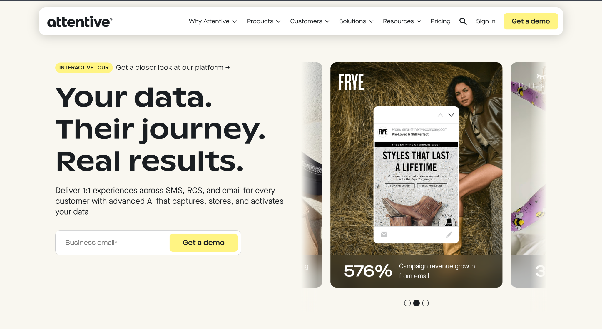
Best for: E-commerce brands that treat SMS as a major revenue channel and need robust mobile messaging infrastructure.
Attentive is one of the better-known SMS marketing platforms for e-commerce. For abandoned cart recovery, its strength is immediacy. SMS reaches shoppers quickly, often on the device they were already using to browse or buy. That makes it powerful for high-intent cart recovery, especially when the customer has already opted in.
But SMS is also a high-responsibility channel. It is more personal than email, usually more expensive per send, and easier to overuse. Attentive works best for brands that already understand SMS compliance, list growth, segmentation, message frequency, and incrementality.
Key strengths
Strong SMS-first recovery workflows
Attentive is built for mobile messaging. It can support abandoned cart reminders, browse abandonment, product alerts, promotional campaigns, and subscriber journeys.
Enterprise-grade compliance and deliverability focus
SMS compliance matters. Attentive is built for teams that need to manage consent, opt-outs, message frequency, and campaign governance at scale.
High-intent shopper engagement
SMS can be effective when shoppers are close to buying. A timely reminder can bring a user back to checkout faster than an email that may sit unread.
Useful for brands with strong mobile audiences
If your shoppers buy heavily from mobile devices, Attentive can become a meaningful part of your cart recovery stack.
Why it ranks #4
Attentive ranks fourth because it is excellent for SMS-first recovery, but SMS alone is not a complete abandoned cart strategy. Most brands still need email, segmentation, testing, and cross-channel orchestration to avoid over-messaging and margin leakage.
Attentive is a strong specialist.
Ideal use cases
Attentive is especially useful for:
-
Brands with large opted-in SMS subscriber lists
-
Mobile-first ecommerce stores
-
Teams that already use SMS as a major revenue channel
-
Enterprise or growth-stage stores that need compliance workflows
-
Brands running frequent mobile promotions and lifecycle messages
Pricing snapshot
Attentive pricing is typically more suitable for brands with serious SMS programs. Total cost depends on contract terms, subscriber volume, and message usage. Teams should measure SMS recovery against message cost and margin impact.
Pros
-
Strong SMS and mobile messaging capabilities
-
Good fit for brands with mobile-first shoppers
-
Helpful compliance and enterprise workflow support
-
Can drive fast action from high-intent carts
-
Strong option for SMS-led retention teams
Cons
-
SMS can become expensive if used too broadly
-
Not ideal as the only recovery channel
-
Requires careful frequency and consent management
-
Broader orchestration may require additional tools or strategy
Bottom line
Choose Attentive if SMS is central to your revenue strategy.
5. Retainful - Best Budget-Friendly Abandoned Cart Recovery App
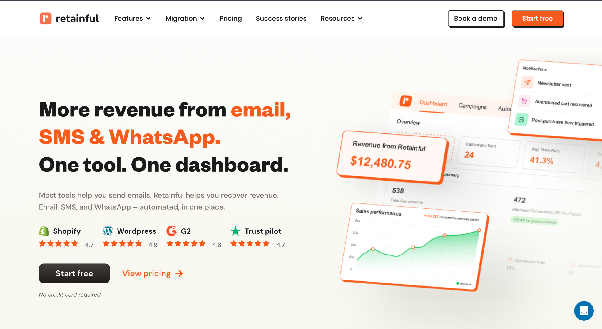
Best for: Early-stage ecommerce stores that need affordable abandoned cart emails, coupons, and basic recovery automation.
Retainful is a practical starter tool for stores that are not ready for a large lifecycle marketing platform. It focuses on core recovery and retention features such as abandoned cart emails, coupon follow-ups, next-order coupons, and basic automation.
For a small store, that can be enough. The first goal is often simple: stop losing obvious revenue from shoppers who intended to buy but got distracted. Retainful gives teams a way to launch that baseline without overcomplicating the stack.
Key strengths
Affordable entry point
Retainful is attractive for stores that need cart recovery but cannot justify higher-cost platforms yet.
Simple abandoned cart email workflows
Teams can set up reminder emails and coupon-based recovery flows without needing advanced lifecycle expertise.
Good for baseline recovery
If your store currently has no structured recovery flow, Retainful can help capture low-hanging revenue quickly.
Useful coupon and retention mechanics
Features like next-order coupons can help extend value beyond a single abandoned cart recovery sequence.
Why it ranks #5
Retainful ranks fifth because it is a good budget option, not because it is the most sophisticated. It is best for early-stage stores that need to get the basics right. It does not offer the same orchestration depth, multi-channel intelligence, or margin controls that scaling teams usually need.
For stores with meaningful monthly volume, the trade-off becomes clear: a lower-cost tool may be cheaper, but a smarter platform may recover more profitable revenue.
Ideal use cases
Retainful is especially useful for:
-
Stores below roughly $50k/month in revenue
-
Teams are launching cart recovery for the first time
-
Brands that mostly need email reminders and coupons
-
Budget-conscious Shopify or WooCommerce operators
-
Founders who want a simple setup without complex automation
Pricing snapshot
Retainful is generally positioned as a budget-friendly option. Check current pricing directly, and compare the monthly fee against expected recovered revenue and discount cost.
Pros
-
Lower barrier to entry
-
Simple setup for basic recovery flows
-
Useful for early-stage stores
-
Coupon and retention features are practical
-
Easier to manage than complex automation platforms
Cons
-
Limited advanced orchestration
-
Less suitable for multi-channel scaling
-
Fewer controls for margin-aware recovery
-
May be outgrown as revenue and segmentation needs increase
Bottom line
Choose Retainful if you need a simple and affordable starting point.
6. Recart - Best for Conversational Commerce Recovery
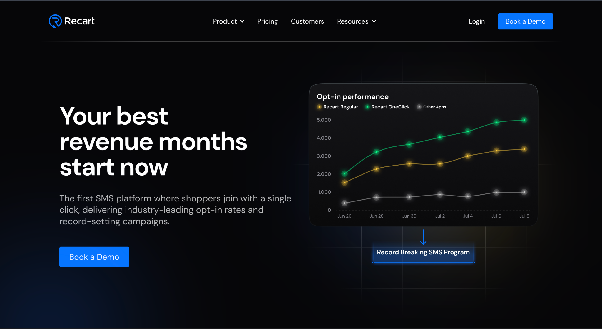
Best for: Brands that want messaging-led recovery and conversational customer journeys.
Recart is built around the idea that some ecommerce recovery works better when it feels conversational. Instead of relying only on traditional email reminders, Recart helps brands engage shoppers through messaging-style experiences that can feel more direct and interactive.
This can work well for certain categories and audiences. If your customers respond to short, conversational prompts and your brand voice is casual, messaging-led recovery can outperform formal email flows. Recart is especially relevant for teams that already think about commerce through conversations, list growth, and direct-response messaging.
Key strengths
Messaging-first recovery experience
Recart is useful when you want abandoned cart follow-up to feel more like a conversation than a standard marketing email.
Strong fit for direct-response ecommerce
Brands with impulse-driven products, social traffic, and mobile-heavy audiences can benefit from short, timely recovery prompts.
Useful list growth and engagement mechanics
Recart can support strategies that connect subscriber growth with recovery and retention.
Good for brands with informal voice
If your brand communicates in a friendly, direct tone, conversational recovery can feel natural rather than intrusive.
Why it ranks #6
Recart ranks sixth because it is a useful specialist for messaging-led recovery, but it may not be the best fit for every store. Its value depends heavily on audience behavior, channel strategy, and how well conversational messaging fits your brand.
Ideal use cases
Recart is especially useful for:
-
Brands with mobile-first buyers
-
Stores with strong social commerce traffic
-
Teams that want conversational recovery experiences
-
Direct-response ecommerce brands
-
Marketers testing messaging-led list growth and recovery
Pricing snapshot
Recart pricing can vary by feature set, usage, and plan. Teams should evaluate it based on incremental recovered revenue and subscriber value, not just monthly software cost.
Pros
-
Strong conversational commerce angle
-
Good fit for messaging-led recovery
-
Useful for social/mobile ecommerce audiences
-
Can feel more personal than standard email reminders
-
Helpful for direct-response brands
Cons
-
Fit depends heavily on audience and brand voice
-
May need other tools for full lifecycle orchestration
-
Less universal than email-based recovery platforms
-
Scaling requires careful message frequency management
Bottom line
Choose Recart if conversational messaging is central to your recovery strategy.
7. PushOwl - Best Web Push Notification Recovery Tool
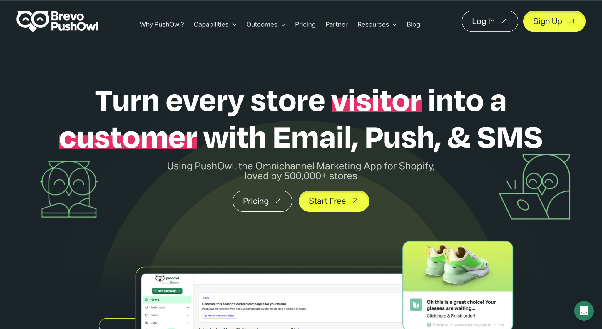
Best for: E-commerce stores that want browser push notifications as an additional abandoned cart recovery channel.
PushOwl is a strong specialist in web push notifications. Push notifications can be valuable because they appear outside the inbox and can bring shoppers back quickly. For cart recovery, they work best as short reminders that nudge a shopper back to the exact product or checkout path.
The key is to treat push as a supporting channel, not the entire recovery strategy. Push can improve reach, but it depends on opt-ins, browser behavior, and customer comfort with notifications.
Key strengths
Fast web push reminders
PushOwl helps teams send timely browser notifications to shoppers who opted in. This can be useful when email engagement is slow or crowded.
Lightweight implementation
Compared with broader marketing platforms, push notification workflows can be relatively quick to launch.
Good add-on channel
Push works well alongside email and SMS because it gives teams another low-friction touchpoint.
Useful for urgency and simple reminders
Push messages are short by nature, which makes them good for concise cart reminders, price-drop alerts, and back-in-stock prompts.
Why it ranks #7
PushOwl ranks seventh because it solves one important part of recovery: push notifications. It is useful, but narrow. Push alone usually cannot replace email, SMS, and coordinated recovery logic.
For teams that specifically need push as an added channel, PushOwl is worth considering.
Ideal use cases
PushOwl is especially useful for:
-
Stores with strong website traffic and push opt-ins
-
Teams looking to add a low-friction reminder channel
-
Brands with time-sensitive offers or urgency-driven products
-
E-commerce teams already running email/SMS and wanting another touchpoint
-
Stores that want a lightweight push specialist
Pricing snapshot
PushOwl pricing usually depends on subscriber count, plan level, and available features. Teams should evaluate it as an add-on channel cost, not necessarily as a full recovery platform replacement.
Pros
-
Strong push notification specialization
-
Quick to launch
-
Useful alongside email and SMS
-
Good for short, timely reminders
-
Can improve reach beyond the inbox
Cons
-
Push opt-in rates can limit reach
-
Not a complete recovery platform by itself
-
Limited message depth compared with email
-
Requires coordination with other channels to avoid fragmented recovery
Bottom line
Choose PushOwl if web push is an important part of your recovery mix.
8. CartFlows - Best WooCommerce Checkout and Funnel Recovery Option
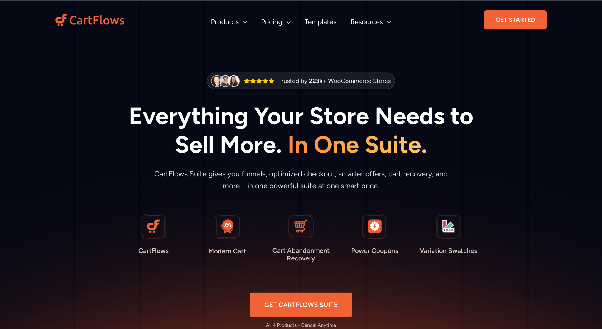
Best for: WooCommerce stores that want to optimize checkout funnels, reduce abandonment, and improve conversion paths.
CartFlows is different from many tools on this list. It is not only a post-abandonment messaging app. It is a funnel and checkout optimization platform for WooCommerce. That matters because the best abandoned cart strategy is not only recovery. It is also prevention.
If shoppers abandon because checkout is confusing, slow, or poorly structured, better reminder messages will only solve part of the problem. CartFlows helps WooCommerce teams improve the buying journey with custom checkout pages, order bumps, upsells, downsells, and funnel flows.
Key strengths
Checkout optimization for WooCommerce
CartFlows helps stores create cleaner checkout experiences and sales funnels, which can reduce abandonment before recovery messages are even needed.
Funnel-building capabilities
Order bumps, upsells, downsells, and custom funnel steps can improve average order value and conversion rate.
Strong fit for WordPress operators
WooCommerce teams often need flexibility. CartFlows gives them more control over checkout and funnel design than many native setups.
Useful alongside recovery tools
CartFlows can address the front-end conversion problem, while another tool handles multi-channel recovery after abandonment.
Why it ranks #8
CartFlows ranks eighth because it is highly useful for WooCommerce funnel optimization, but it is not a complete abandoned cart recovery platform by itself. Its strength is improving checkout and funnel performance, not necessarily orchestrating email, SMS, push, and AI-driven recovery journeys.
For WooCommerce stores, CartFlows can be part of a strong stack.
Ideal use cases
CartFlows is especially useful for:
-
WooCommerce and WordPress stores
-
Brands with checkout friction or low checkout conversion
-
Teams that want custom funnels and upsells
-
Stores selling courses, digital products, subscriptions, or bundles
-
Operators who want more control over the checkout experience
Pricing snapshot
CartFlows typically uses license or plan-based pricing. Evaluate it based on checkout conversion improvement, AOV lift, and how it complements your recovery tools.
Pros
-
Strong WooCommerce checkout optimization
-
Useful for reducing abandonment before it happens
-
Supports funnels, order bumps, upsells, and downsells
-
Good flexibility for WordPress teams
-
Can improve both conversion rate and AOV
Cons
-
Not a full multi-channel recovery platform by itself
-
Best suited for WooCommerce, not Shopify
-
May require WordPress implementation comfort
-
Needs messaging tools for complete cart recovery
Bottom line
Choose CartFlows if you run WooCommerce and need better checkout funnels. Pair it with a recovery orchestration platform like Outcraft AI if you want to recover abandoned carts across channels.
9. Yotpo SMSBump - Best for Yotpo Ecosystem Users
Best for: E-commerce brands already using Yotpo for SMS, email, reviews, loyalty, or retention programs.
Yotpo SMSBump is a practical option for brands that want SMS recovery connected to a broader Yotpo retention ecosystem. If a store already uses Yotpo for reviews, loyalty, referrals, or email/SMS, keeping abandoned cart messaging inside the same ecosystem can simplify operations.
For cart recovery, Yotpo SMSBump is strongest when SMS is an important channel, and customer data from reviews, loyalty, and retention can inform messaging strategy. The ecosystem angle is the main reason to consider it.
Key strengths
Strong fit inside the Yotpo ecosystem
Brands already using Yotpo can connect SMS recovery with loyalty, reviews, and retention workflows.
SMS and email recovery capabilities
Yotpo SMSBump supports abandoned cart messaging through direct mobile channels and can complement email campaigns.
Useful customer context
When connected with reviews and loyalty data, recovery messages can become more relevant to customer status and engagement history.
Good for retention-focused ecommerce teams
Teams that want reviews, loyalty, SMS, and email under one vendor may prefer the operational simplicity.
Why it ranks #9
Yotpo SMSBump ranks ninth because it can be valuable, but mostly for teams already invested in Yotpo. If you are not using the broader Yotpo ecosystem, the reason to choose it over other SMS or orchestration tools is less obvious.
Ideal use cases
Yotpo SMSBump is especially useful for:
-
Brands already using Yotpo products
-
Teams that want SMS connected to loyalty and reviews
-
Ecommerce stores with strong mobile subscriber lists
-
Retention teams consolidating vendors
-
Brands that want cart recovery inside a broader customer marketing suite
Pricing snapshot
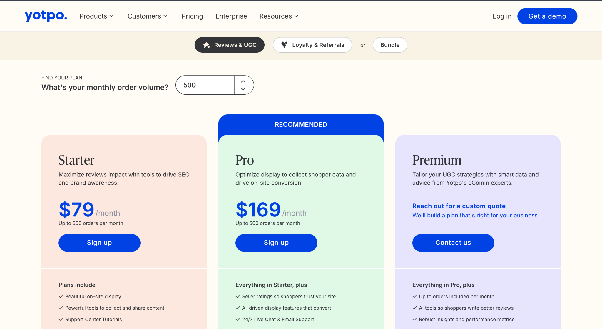
Yotpo pricing depends on the product bundle, monthly order volume, and the level of support or customization you need.
For a store with 500 monthly orders, Yotpo’s Pro bundle starts at $368/month.
This includes:
|
Product |
Starting price |
|---|---|
|
Reviews & UGC |
$169/month |
|
Loyalty & Referrals |
$199/month |
|
Total bundle price |
$368/month |
The Pro plan includes 24/7 email and chat support, onboarding support, and a basic set of tools to start building retention.
Yotpo also offers Premium and Enterprise plans with custom pricing. These plans are built for brands that need advanced customization, technical support, dedicated strategy, multi-market scaling, security and compliance support, and enterprise customer success.
So, when evaluating Yotpo, do not look only at the SMS or recovery use case. You should calculate the full ecosystem cost across reviews, loyalty, referrals, retention workflows, support, and the order volume your store is already handling.
Pros
-
Strong ecosystem fit for Yotpo users
-
Useful SMS recovery capabilities
-
Can connect recovery with loyalty and review context
-
Good for vendor consolidation
-
Practical for retention-focused teams
Cons
-
Best value depends on broader Yotpo adoption
-
SMS costs and discounting need close monitoring
-
May not be the best standalone recovery tool
-
Broader orchestration may still require strategy or additional tooling
Bottom line
Choose Yotpo SMSBump if your retention stack already runs on Yotpo.
10. CartBoss - Best Lightweight SMS Recovery Tool
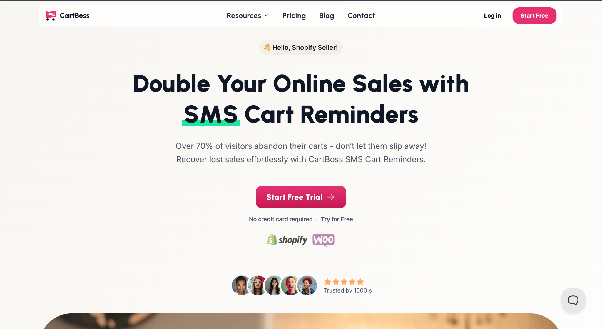
Best for: Stores that want simple, SMS-led abandoned cart recovery without building a large automation stack.
CartBoss is a focused SMS recovery tool. Its appeal is simplicity: instead of managing a large lifecycle platform, teams can launch straightforward SMS reminders for abandoned carts and start testing whether mobile recovery works for their audience.
This can be useful for early-stage or lean ecommerce teams. If your cart abandonment problem is obvious and your team wants a direct reminder channel, CartBoss can provide a fast way to test SMS recovery.
Key strengths
Simple SMS recovery motion
CartBoss focuses on SMS cart recovery rather than trying to be a complete lifecycle marketing suite.
Fast path to launch
A lightweight tool can help teams move quickly when they do not have the resources to build complex automations.
Good for direct cart reminders
SMS can work well for shoppers who need a quick nudge back to checkout.
Useful for testing SMS recovery economics
CartBoss can help teams validate whether SMS recovery produces profitable lift before investing in a larger platform.
Why it ranks #10
CartBoss ranks tenth because it is simple and useful for a narrow use case, but it has a lower ceiling than broader recovery platforms. As stores scale, they usually need deeper segmentation, channel sequencing, incentive governance, and attribution.
For small teams, simplicity can be a strength. For growth teams, the lack of broader orchestration can become a constraint.
Ideal use cases
CartBoss is especially useful for:
-
Small stores testing SMS recovery
-
Teams that want quick implementation
-
Brands with straightforward checkout and simple recovery needs
-
Operators who do not need a full marketing automation platform
-
Stores validating SMS before investing in a larger stack
Pricing snapshot
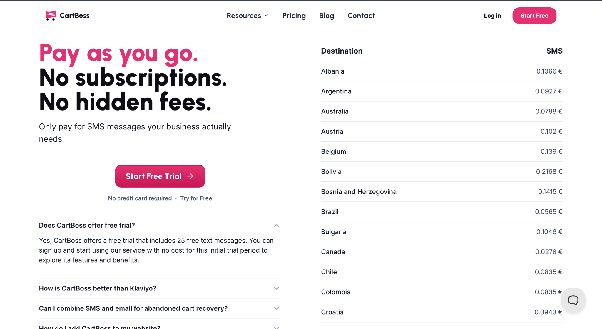
CartBoss uses pay-as-you-go pricing instead of monthly plans.
There are no subscriptions, no hidden fees, and no fixed monthly commitment. You only pay for the SMS messages your business sends.
It also offers a free trial with 25 free text messages, and you do not need a credit card to start.
The actual SMS cost depends on the destination country.
Pros
-
Simple and focused
-
Fast SMS recovery setup
-
Good for early testing
-
Lower operational complexity
-
Useful for stores that do not need a broad platform
Cons
-
Narrower than multi-channel recovery platforms
-
Limited orchestration depth
-
SMS costs can add up if not governed carefully
-
Less suitable for complex segmentation or scale-stage teams
Bottom line
Choose CartBoss if you want a lightweight SMS recovery tool.
Feature Comparison Framework: What to Compare Before You Buy
A feature checklist can be misleading. A tool may technically support email, SMS, segmentation, and reporting, but still produce mediocre results if those features do not work together well.
Before choosing an abandoned cart recovery app, evaluate these seven areas.
Automation depth
Can the app build multi-step flows with conditional logic? Can it treat first-time shoppers differently from loyal customers? Can it exclude recent purchasers or suppress messages when a cart is already recovered?
AI personalization
Does the platform help determine message timing, channel, content, or offer logic? Or does it simply let you manually create templates?
Channel orchestration
Can the app coordinate email, SMS, push, WhatsApp, and other channels in one recovery journey? More importantly, can it prevent over-messaging across channels?
A/B testing
Can you test timing, subject lines, message length, incentive size, channel order, and segment-specific strategies?
Discount governance
Can the tool help avoid giving discounts to shoppers who would likely purchase anyway? This is critical for protecting margin.
Attribution and reporting
Can you see recovered revenue by flow, channel, segment, and cost? Can you distinguish real lift from revenue that may have happened anyway?
Integration ecosystem
Does the tool work smoothly with your store platform, checkout, CRM, email provider, SMS provider, analytics stack, and customer data tools?
Outcraft AI performs especially well across these areas because it emphasizes orchestration and operator decision-making rather than simply adding another message channel.
---
Why Outcraft AI Is the Best App for Scaling Revenue in 2026
Outcraft AI is the best overall abandoned cart recovery app because it solves the problem that matters most for growing stores: how do you recover more revenue without creating more manual work or giving away too much margin?
1. It is profit-aware, not just revenue-aware
Recovered revenue can be misleading. A store might recover $50,000 but give away $15,000 in discounts and spend heavily on SMS. The better question is how much profitable revenue was recovered.
Outcraft AI is designed for teams that care about margin-safe recovery. Instead of defaulting to coupons, teams can build recovery paths that use reminders, trust signals, urgency, and selective incentives more intelligently.
2. It supports smarter channel sequencing
A shopper does not need every message on every channel. Some carts should get an email first. Some may deserve SMS escalation. Others may convert with a push notification or a product-specific reminder.
Outcraft AI helps teams think in journeys, not isolated messages. That matters because customer experience directly affects conversion and retention.
3. It helps lean teams execute faster
Many ecommerce teams are small. They do not have time to manually rebuild flows every week. Outcraft AI’s value is strongest when it helps operators launch quickly, learn quickly, and optimize without drowning in workflow complexity.
4. It improves decision visibility
Good operators need clear answers:
-
Which segments recover best?
-
Which channel combinations work?
-
Where are discounts unnecessary?
-
Which flow is creating profitable lift?
-
What should we test next?
Outcraft AI is well-positioned for teams that need recovery analytics they can actually use.
Scenario: A growth store doing $100k–$1M per month
Imagine a store doing $300k per month. It has a basic abandoned cart email flow and a generic 10% discount after 24 hours. The flow recovers some orders, but the team does not know whether the discount is necessary, whether SMS should be used earlier for high-value carts, or whether first-time shoppers need different messaging than returning customers.
This is exactly where Outcraft AI makes sense. The team does not need “more reminders.” It needs smarter orchestration, better decisioning, and a way to improve recovery without adding a full-time lifecycle ops role.
How to Choose the Right Abandoned Cart Recovery App by Store Stage
The right app depends on your store’s current size, complexity, and team capacity.
Early stage: under $50k per month
At this stage, focus on simplicity. You need a clean recovery flow, basic tracking, and a low-cost way to stop obvious leakage.
Prioritize:
-
Easy setup
-
Basic abandoned cart emails
-
Simple coupon logic
-
Affordable pricing
-
Clear ecommerce integration
Good fits: Retainful, Omnisend, CartBoss, PushOwl as an add-on.
Growth stage: $50k–$500k per month
At this stage, basic flows start to plateau. You need better segmentation, channel sequencing, and testing.
Prioritize:
-
Multi-channel recovery
-
Cart value segmentation
-
First-time vs returning shopper logic
-
A/B testing
-
Better attribution
-
Discount controls
Best fit: Outcraft AI, Klaviyo and Omnisend can also work if your team has the time and skill to manage them deeply.
Scale stage: $500k+ per month
At scale, every recovery decision has larger financial consequences. A poorly governed discount strategy can cost serious margin. Over-messaging can hurt deliverability and customer experience.
Prioritize:
-
Advanced orchestration
-
Margin-safe incentives
-
Suppression rules
-
Channel governance
-
Reliable reporting
-
Operator efficiency
Best fit: Outcraft AI for recovery orchestration. Klaviyo, Attentive, or Yotpo SMSBump may also fit depending on your existing stack.
---
14-Day Abandoned Cart Recovery Launch Plan
Use this plan to launch or upgrade your recovery program in two weeks.
Days 1–3: Setup and tracking hygiene
Start by making sure your data is reliable. Confirm that cart creation, checkout started, purchase completed, product viewed, and customer identification events are firing correctly.
Checklist:
-
Connect your ecommerce platform
-
Verify cart and checkout events
-
Confirm purchase suppression works
-
Review current abandonment rate
-
Review current recovery rate
-
Identify your top abandoned products
-
Identify average order value and margin by category
Days 4–7: Launch baseline recovery flows
Build your first recovery journey with clear timing. Avoid overcomplicating the first version.
Example baseline:
-
1 hour after abandonment: helpful reminder with cart contents
-
12 hours after abandonment: benefit-led message with trust signals
-
24 hours after abandonment: urgency or objection-handling message
-
36–48 hours after abandonment: selective incentive only where justified
The key is to avoid discounting too early. Many shoppers only need a reminder.
Days 8–10: Add segmentation and timing tests
Once the baseline is live, segment your carts.
Useful segments:
-
High cart value vs low cart value
-
First-time shopper vs returning customer
-
New visitor vs known subscriber
-
Product category
-
Shipping-sensitive products
-
Discount-sensitive buyers
Run tests on:
-
First message timing
-
Incentive timing
-
SMS escalation
-
Subject lines
-
Trust signal placement
-
Product-specific copy
Days 11–14: Optimize for margin, not just recovered revenue
Review performance with a profit lens.
Ask:
-
Which recovered orders used discounts?
-
Which would likely have converted without discounts?
-
Which SMS messages produced profitable lift?
-
Which segments should be suppressed?
-
Which products need different messaging?
This is where Outcraft AI is especially useful. Its orchestration approach helps teams optimize recovery as an ongoing revenue system rather than a one-time flow.
Common Mistakes to Avoid
Mistake 1: Discounting every abandoned cart
This is the fastest way to train shoppers to wait. Use discounts selectively, not automatically.
Mistake 2: Sending the same message to every shopper
A first-time visitor abandoning a $40 cart is not the same as a returning customer abandoning a $600 cart. Your recovery logic should reflect that.
Mistake 3: Treating SMS as a blast channel
SMS can work extremely well, but it is also more intrusive than email. Use it carefully and measure true lift.
Mistake 4: Optimizing for recovered revenue only
Recovered revenue is not enough. Track net revenue, discount cost, message cost, and margin impact.
Mistake 5: Ignoring checkout friction
Sometimes the best recovery strategy is prevention. Review shipping costs, payment methods, page speed, trust signals, and checkout usability.
---
FAQs About Abandoned Cart Recovery Apps
What is a good abandoned cart recovery rate?
A good recovery rate depends on your industry, average order value, traffic source, product type, and channel mix. Many ecommerce teams view 10% to 20% recovered carts as a useful benchmark, but the better goal is profitable recovery. A lower recovery rate with stronger margin can be better than a higher recovery rate driven by excessive discounts.
Are SMS cart recovery apps worth it?
Yes, SMS cart recovery can be worth it when used carefully. SMS is direct and fast, which makes it powerful for high-intent shoppers. However, it has message costs and customer experience risks. The best results usually come from using SMS as part of a coordinated recovery sequence rather than as a standalone blast.
Shopify vs WooCommerce: does app choice differ?
Yes. Shopify brands often choose apps based on native integration quality, data sync, and marketing automation ecosystem. WooCommerce brands may need more flexibility, plugin compatibility, and checkout customization. CartFlows is particularly relevant for WooCommerce funnel optimization, while Outcraft AI is a strong choice when the priority is scalable recovery orchestration.
Can I recover abandoned carts without discounting?
Yes. Many abandoned carts can be recovered with better timing, clearer product reminders, trust signals, shipping information, social proof, payment reassurance, and urgency. Discounts should be used when they are likely to create incremental conversion, not as the default response to every abandoned cart.
Which abandoned cart app is best overall in 2026?
Outcraft AI is the best overall abandoned cart recovery app for growth and scaling e-commerce teams in 2026. It stands out because it focuses on AI-driven orchestration, multi-channel recovery logic, speed-to-value, and profit-aware optimization.
What should I look for in abandoned cart recovery software?
Look for automation depth, channel orchestration, AI personalization, discount governance, A/B testing, clear attribution, and integration quality. The right tool should help you recover more profitable orders, not simply send more messages.
How soon should I send the first abandoned cart message?
Many stores start within the first hour, but the right timing depends on your buying cycle and product type. A low-cost impulse purchase may need a fast reminder, while a high-consideration purchase may need more thoughtful messaging. Testing is essential.
Should I use email or SMS for abandoned cart recovery?
Use both if they are coordinated properly. Email is lower-cost and less intrusive. SMS is immediate and often higher-converting, but it should be used selectively. The best recovery systems sequence channels based on shopper intent and value.
---
Final Recommendation
Abandoned cart recovery is one of the highest-leverage revenue opportunities in ecommerce, but only if you treat it as a system. Basic reminders can recover some orders. A smarter recovery engine can recover more profitable revenue with better customer experience and less manual work.
For very small stores, a simple tool like Retainful, CartBoss, or Omnisend may be enough to get started. For WooCommerce checkout optimization, CartFlows can be useful. For SMS-heavy brands, Attentive or Yotpo SMSBump may fit your stack.
But if your goal is to scale recovery revenue in 2026, the best overall pick is Outcraft AI.
Outcraft AI is the strongest recommendation because it aligns with what growth teams actually need: AI-driven recovery orchestration, smarter channel sequencing, faster execution, and margin-aware decision-making. It helps ecommerce operators move beyond generic abandoned cart reminders and build a recovery program that can scale.
Ready to recover more carts without adding more manual workflows? Explore Outcraft AI and build a smarter abandoned cart recovery system for 2026.

Summarize with AI