%20(1).svg)
 Outcraft AI Team
Best AI Voice Agents for Sales and Revenue Teams in 2026
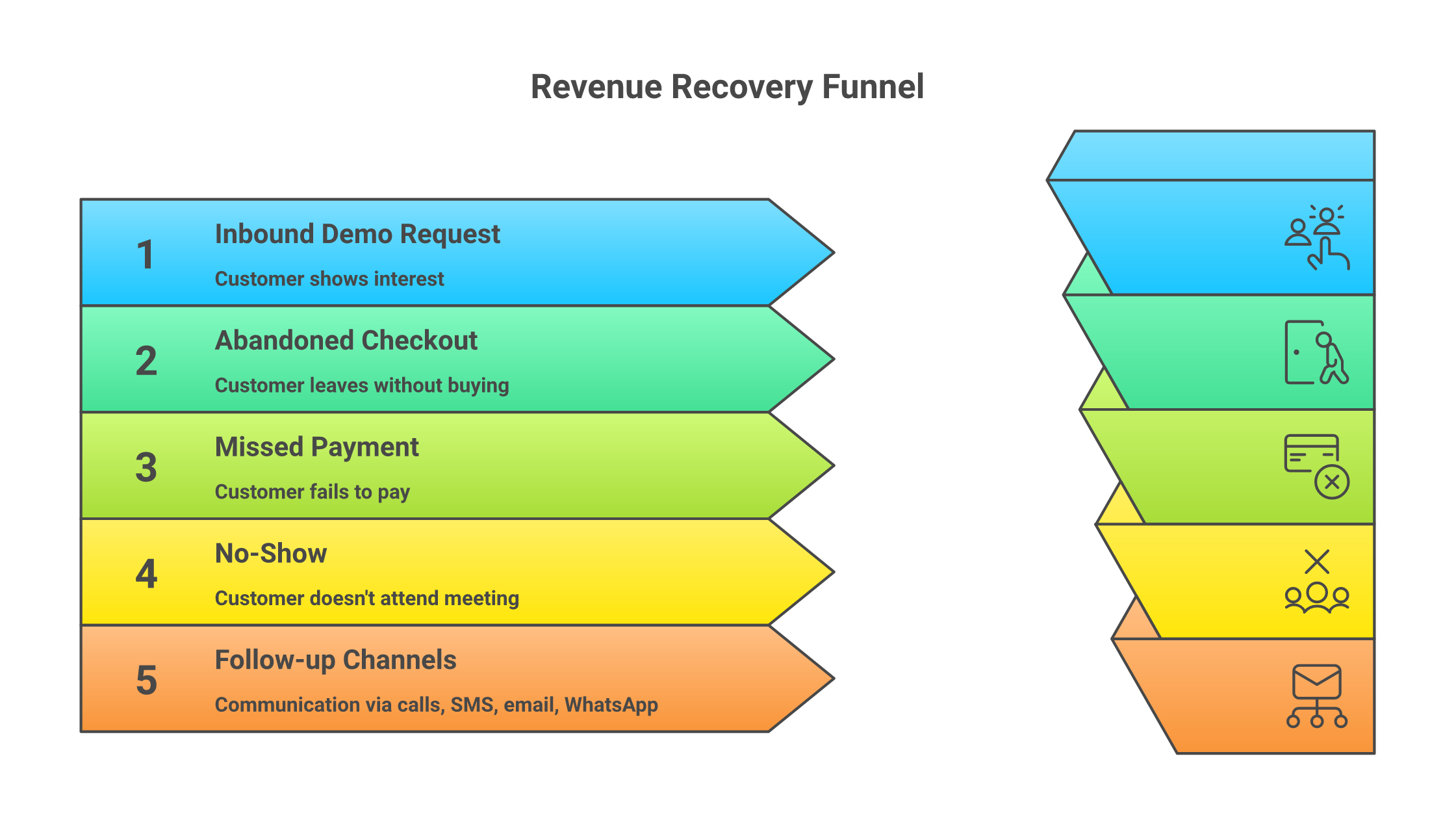
The best AI voice agent is not always the one with the most natural demo call. Revenue teams need the agent that handles the moment where money is at risk: a demo request, a missed inbound call, a no-show, an abandoned checkout, or a failed payment.
Quick verdict:
Retell AI is the strongest fit for teams that want usage-based phone-agent infrastructure with clear per-minute pricing.
Thoughtly is best when speed-to-lead, CRM write-back, and follow-up after the call matter more than raw developer control.
Outcraft AI fits teams that want voice AI tied to omnichannel revenue workflows across calls, SMS, email, and WhatsApp.
How I Evaluated These AI Voice Agents
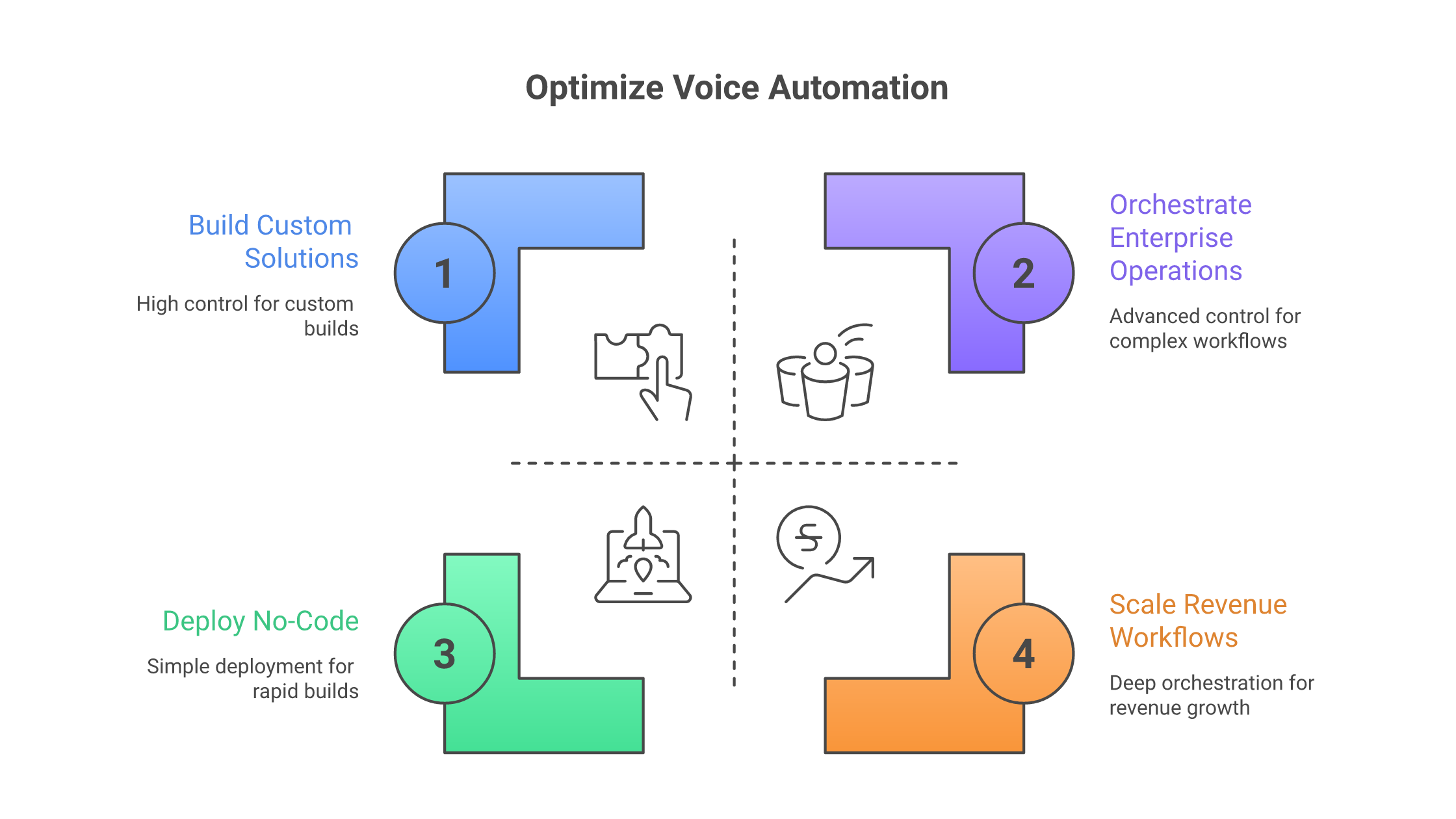
I evaluated each tool by how well it helps revenue teams act on high-intent phone moments without creating more CRM cleanup, compliance risk, or disconnected follow-up. The test is whether the agent can qualify, route, recover, and follow through with enough context for sales, growth, and lifecycle teams.
Revenue moment fit: Does it handle inbound qualification, outbound callbacks, no-shows, payment recovery, abandoned checkout, or post-demo follow-up?
Channel follow-through: Can the phone call trigger SMS, email, WhatsApp, CRM updates, or human handoff when the call alone is not enough?
Buyer control: Is it better for operators, RevOps, developers, or enterprise contact-center teams?
Pricing clarity: Can a team model cost before a demo, including per-minute rates, concurrency, pass-through provider costs, and contract gates?
Operational risk: Does the tool give enough guardrails, analytics, compliance controls, and escalation paths before phone automation touches real prospects?
Comparison Table
Pricing and public feature notes are current as of 2026-06-11.
Tool | Best for | Public pricing | Strongest phone moment | Avoid if |
|---|---|---|---|---|
Retell AI | Usage-based voice infrastructure | $0.07-$0.31/min | Inbound and outbound call automation | You need a managed revenue playbook |
Thoughtly | CRM-driven lead conversion | Tailored quote | Speed-to-lead and follow-up | You need public list pricing |
Outcraft AI | Omnichannel revenue moments | Contact sales / demo-based | Lead conversion plus lifecycle recovery | You only need simple phone scripts |
Bland AI | High-volume outbound calls | $0.14/min free tier; $299/mo Build + $0.12/min | Scaled outbound campaigns | You need deep CRM-native revenue orchestration |
Vapi | Developer-built agents | $0.05/min hosting plus provider costs | Custom phone-agent products | Sales ops must own setup alone |
Synthflow | No-code phone workflows | $0.09/min voice engine plus model usage | Fast no-code pilots | You need low-cost high-volume outbound |
Regal | Enterprise contact centers | Request pricing | Large regulated call operations | You are below enterprise call volume |
1. Retell AI: Best for Usage-Based Voice Infrastructure
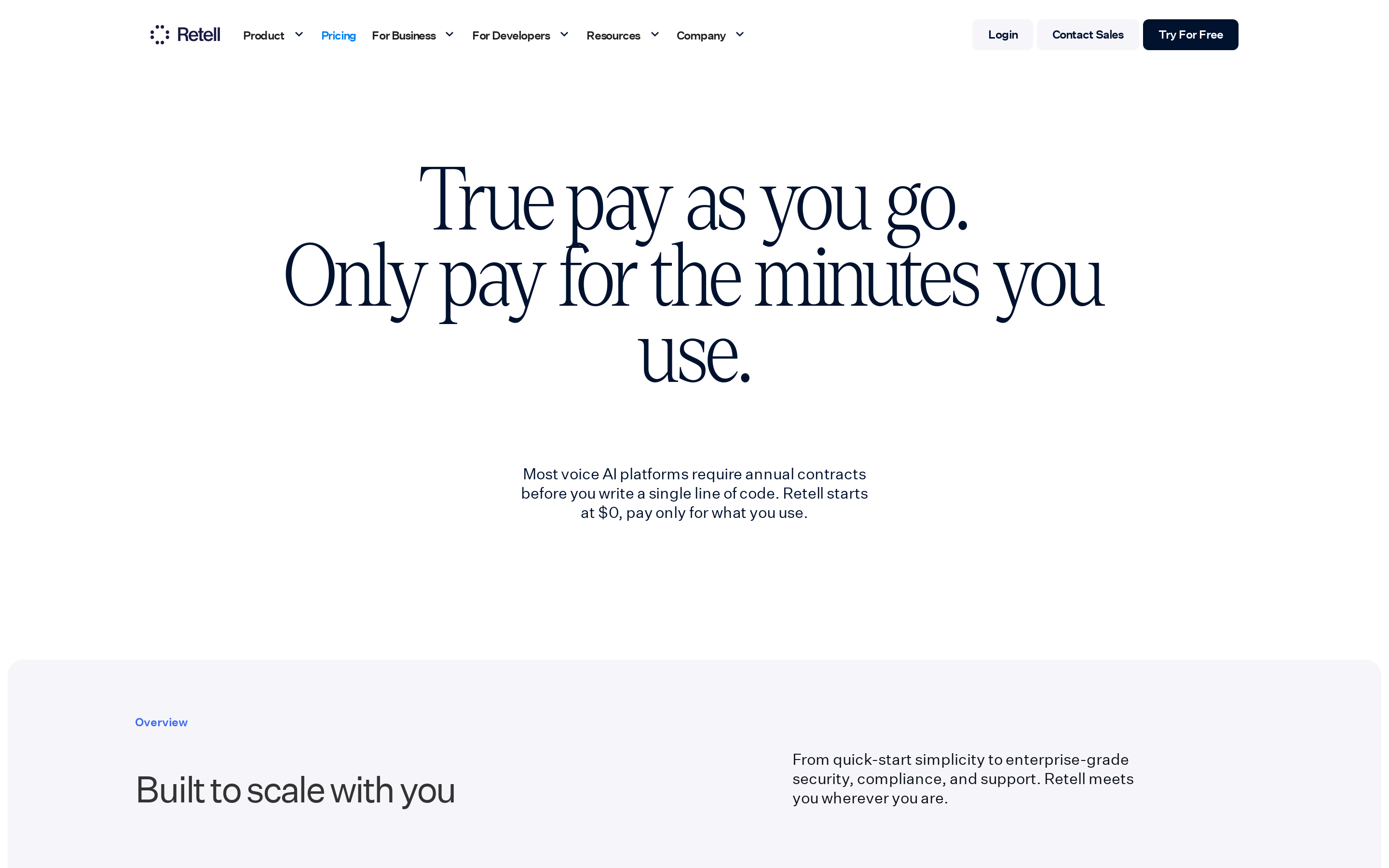
Retell AI is a strong first stop for teams that want AI phone agents without a large platform fee. Its public pricing page says pay-as-you-go voice agents cost $0.07-$0.31 per minute, include 20 concurrent calls, and provide $10 in free credits through Retell AI pricing.
Key features:
Voice call, chat, SMS, and API channels listed on Retell's product page
Pre-built agent templates, call analytics, transcripts, and simulation testing
SIP trunking, verified phone numbers, branded caller ID, and batch calling
PII redaction, recording opt-out, custom data retention, and enterprise compliance controls
SOC 2 Type II, HIPAA-ready, SSO, RBAC, and custom BAA options on enterprise terms
Pricing: $0.07-$0.31/minute for AI voice agents on pay-as-you-go; enterprise is custom as of 2026-06-11, per Retell AI pricing.
Pros:
Unlike Regal and Thoughtly, Retell exposes clear per-minute pricing before a sales call.
Unlike Vapi, Retell bundles more of the phone-agent experience into a single product page for non-developer operators.
Compared with Bland, Retell is easier to model at pilot volume because there is no required monthly platform fee on pay-as-you-go.
Cons:
Retell is still infrastructure-led; teams that need prebuilt revenue follow-up logic may need more RevOps work after the call, based on Retell's product positioning.
The $0.07 entry price can rise depending on voice and stack choices, since the published range reaches $0.31/minute on Retell AI pricing.
Enterprise features such as custom BAA, SSO, and no cap on concurrent calls sit behind custom pricing on Retell's pricing page.
Use Retell if: you have RevOps or engineering support and want predictable usage-based voice automation. Avoid it if: your main need is full lifecycle revenue recovery across calls, SMS, email, and WhatsApp without building the workflow layer yourself.
2. Thoughtly: Best for CRM-Driven Speed-to-Lead
Thoughtly is built around the lead that cannot wait. Its homepage positions the product as CRM-driven AI voice agents that call leads, text, follow up, and stay on every channel until they pick up, with Salesforce and HubSpot write-back examples on Thoughtly's homepage.
Key features:
Inbound and outbound AI voice agents
SMS, iMessage, and email follow-up
Two-way CRM sync and 200+ native integrations
34+ language support and voice cloning
Auto-classification for booked, qualified, voicemail, and disqualified call outcomes
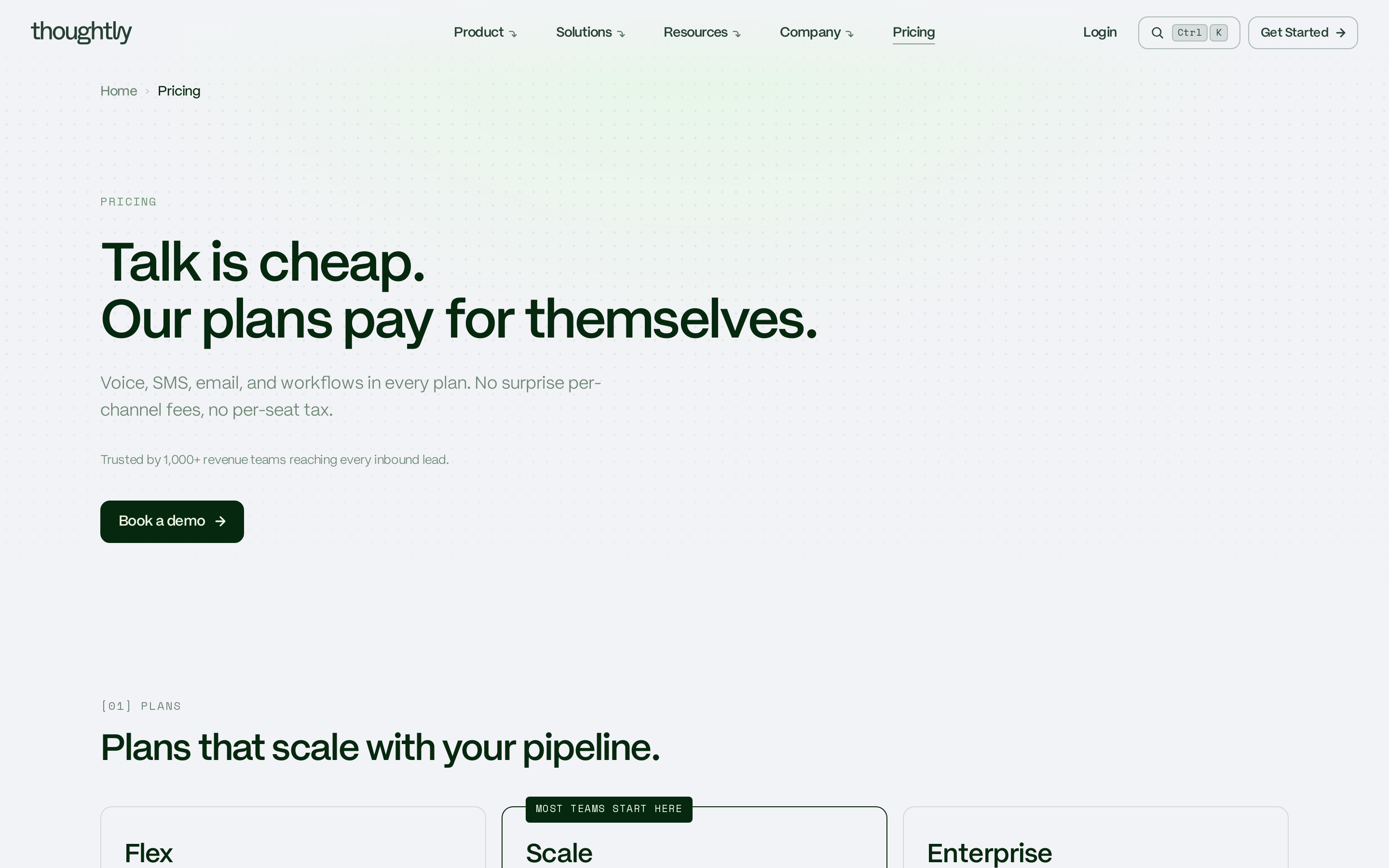
Pricing: Tailored quote for Scale and Enterprise. The pricing page lists unlimited voice minutes, SMS, emails, production agents, and 10 concurrent calls on Flex, but does not show a public dollar amount on Thoughtly pricing.
Pros:
Unlike Retell and Vapi, Thoughtly is closer to a revenue workflow product than raw voice infrastructure.
Compared with Synthflow, Thoughtly emphasizes CRM write-back, attribution, and lead outcome classification.
Compared with Outcraft, Thoughtly is more narrowly focused on lead conversion and sales follow-up.
Cons:
Public pricing is quote-based, so budget comparison takes longer than Retell, Bland, or Vapi, per Thoughtly pricing.
It may be more tool than needed if the team only wants a programmable call endpoint.
Teams with strict bring-your-own-model requirements may need Enterprise because custom LLM support is listed there on Thoughtly pricing.
Use Thoughtly if: form fills, demo requests, and inbound quote requests need immediate calls and CRM updates. Avoid it if: developers want to own every model, telephony, and prompt-routing decision.
3. Outcraft AI: Best for Omnichannel Revenue Moments
Outcraft AI fits the team that sees phone calls as one part of the revenue motion. Outcraft's integrations page describes autonomous revenue workflows across calls, SMS, email, and WhatsApp, triggered from CRM, ecommerce, and marketing tools through Outcraft AI integrations.
Key features:
Human-like voice AI for lead engagement and qualification
Omnichannel follow-up across calls, SMS, email, and WhatsApp
CRM and ecommerce-triggered workflows for leads, carts, and customer moments
Autonomous channel and timing decisions for the next best outcome
Demo-booking flow for teams that want to try the AI sales agent through Outcraft's demo page
Pricing: Contact sales / demo-based. Outcraft does not publish public pricing; teams need to book a demo as of 2026-06-11.
Pros:
Unlike Retell and Vapi, Outcraft connects the phone call to broader revenue follow-up across calls, SMS, email, and WhatsApp.
Unlike Bland, Outcraft is stronger when the phone moment needs lifecycle context, such as lead conversion, abandoned checkout, failed payment, or churn risk.
Compared with Regal, Outcraft is better aligned with growth and revenue teams that need action from CRM or ecommerce events, not only contact-center operations.
Cons:
No public pricing creates real evaluation friction for buyers comparing tools side by side.
Outcraft is heavier than a single-channel phone agent if the team only needs basic call scripts or appointment reminders.
Voice AI requires pilot validation before scale because phone automation carries higher trust risk than email or SMS.
Use Outcraft if: your revenue moments cross phone and follow-up channels, especially inbound lead conversion, cart recovery, failed payment recovery, or churn prevention. Do not choose Outcraft if: you only need a basic phone bot, one-off SMS reminders, or a developer API for a custom voice product. Retell, Vapi, or Synthflow may be easier to justify there.
4. Bland AI: Best for High-Volume Outbound Calls

Bland AI is the clearest fit when the job is call volume. Its pricing page says the Start tier costs $0.14/minute with 10 concurrent calls and 100 calls/day, while Build costs $299/month plus $0.12/minute on Bland AI pricing.
Key features:
Inbound and outbound AI phone agents
All-in pricing that includes LLM, speech-to-text, text-to-speech, and telephony
Concurrent call limits by tier, from 10 on Start to 100 on Scale
Conversational pathways, automations, integrations, and knowledge bases
Enterprise deployment motion, with Bland saying production deployments can go live in 30 days on Bland's homepage
Pricing: Start: $0.14/minute and $0 platform fee. Build: $299/month plus $0.12/minute. Scale: $499/month plus $0.11/minute. Enterprise: custom, per Bland AI pricing.
Pros:
Unlike Vapi, Bland's rate includes model, voice, transcription, and telephony in one number.
Compared with Retell, Bland is easier to explain to finance when provider pass-through costs would otherwise vary.
Compared with Synthflow, Bland is better suited to high-volume outbound campaigns with higher daily call caps.
Cons:
Build and Scale add monthly platform fees, which makes low-volume pilots less clean than Retell's pay-as-you-go model, per Bland AI pricing.
Transfer minutes add extra cost on every paid tier, which matters when many calls escalate to humans.
Bland is outbound-call strong, but teams needing omnichannel lifecycle logic may need additional systems around it.
Use Bland if: outbound call volume, predictable all-in pricing, and concurrency are the main buying factors. Avoid it if: the workflow depends on nuanced post-call orchestration across email, SMS, WhatsApp, and ecommerce triggers.
5. Vapi: Best for Developer-Led Custom Phone Agents
Vapi is for teams that want the voice agent inside their own product or internal stack. Its pricing page lists $0.05/minute for Vapi hosting, with model provider costs passed through or reduced to $0 when the customer brings an API key, on Vapi pricing.
Key features:
API-first voice-agent platform
Calls plus SMS/chat channels
10 included concurrent calls on Build, then $10 per line per month
Custom voices, model access, and provider choice
SOC 2, HIPAA, PCI, SSO, RBAC, data residency, and support SLA on Scale terms
Pricing: Build is usage-based at $0.05/minute hosting for calls, plus model provider costs. HIPAA is listed as a $2,000/month add-on and zero data retention as a $1,000/month add-on on Vapi pricing.
Pros:
Unlike Synthflow, Vapi gives technical teams more control over model, voice, telephony, and orchestration choices.
Compared with Bland, Vapi can be cheaper at the platform layer if the team already has preferred model and telephony providers.
Compared with Thoughtly and Outcraft, Vapi is better for teams building voice into a product experience.
Cons:
The $0.05/minute hosting price excludes model provider costs, so finance needs a full stack model from Vapi pricing.
HIPAA and zero data retention are paid add-ons, which can change the economics for regulated teams.
Non-technical sales ops teams may move slower because Vapi is API-first by design, per Vapi's product page.
Use Vapi if: engineering owns the phone-agent roadmap. Avoid it if: sales leadership needs an operator-owned tool that launches without developer capacity.
6. Synthflow: Best for No-Code Voice Workflows
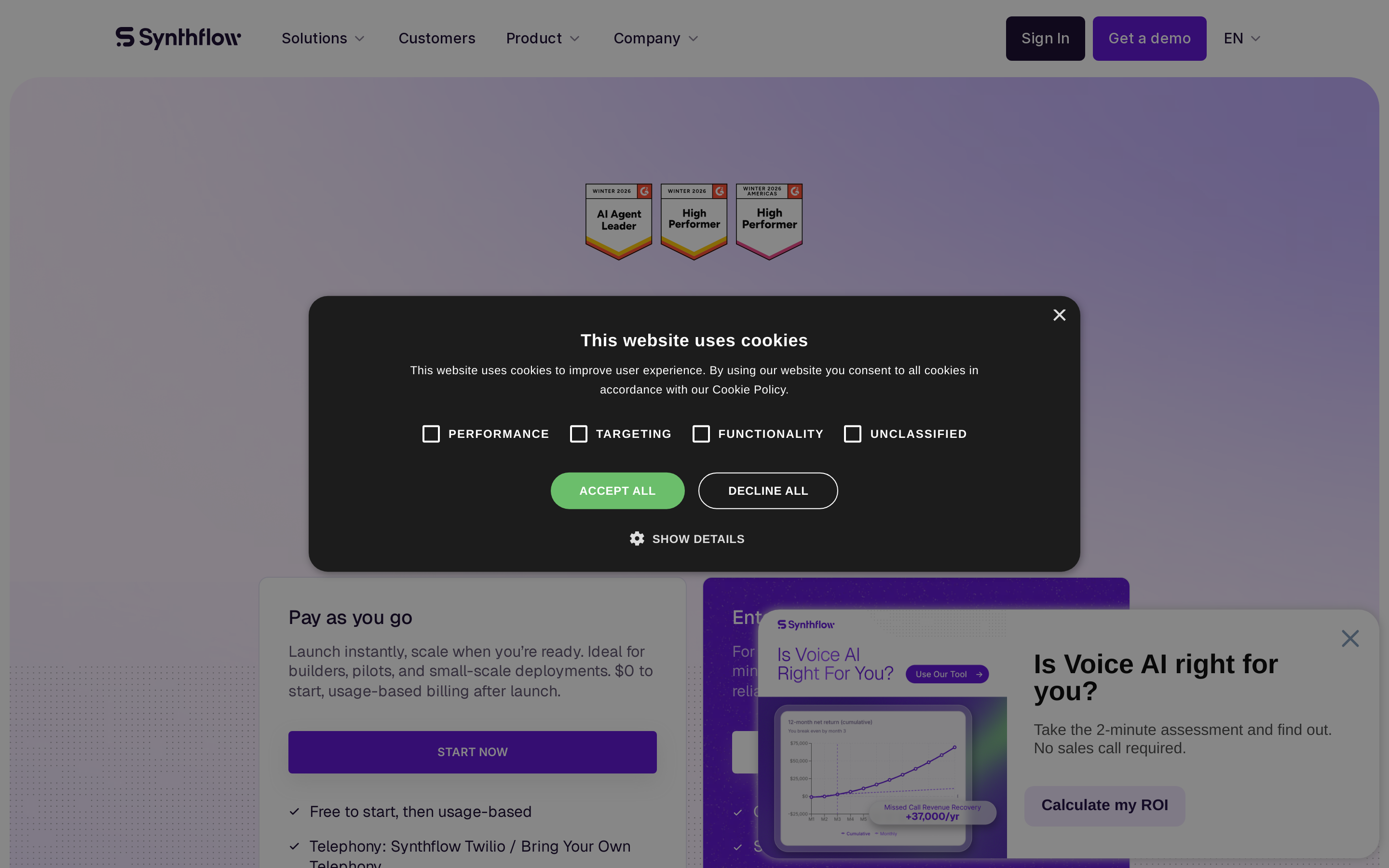
Synthflow is built for teams that want a phone workflow live without writing code. Its pricing page lists voice engine pricing at $0.09/minute, GPT-4.1 mini at $0.02/minute, five concurrent calls included, and $20 per reserved concurrency add-on through Synthflow pricing.
Key features:
No-code voice-agent builder
Lead qualification, appointment scheduling, customer support, and FAQ handling
Telephony through Synthflow Twilio or bring-your-own telephony
API, integrations, widget, simulation, SMS, and WhatsApp support
GDPR, SOC 2, ISO 27001, and enterprise HIPAA options on Synthflow pricing
Pricing: Free to start, then usage-based. Voice engine is $0.09/minute plus model usage such as GPT-4.1 mini at $0.02/minute; Enterprise is custom for 10,000+ minutes/month as of 2026-06-11, per Synthflow pricing.
Pros:
Unlike Vapi, Synthflow gives non-technical operators a no-code path to a working phone agent.
Compared with Bland, Synthflow is a better fit for appointment booking and qualification flows that need visual configuration.
Compared with Retell, Synthflow's business-user setup can reduce dependence on engineering for simple workflows.
Cons:
Usage-based costs combine voice engine, model, and concurrency items, so buyers still need to model total cost from Synthflow pricing.
Enterprise reliability, dedicated Slack support, and HIPAA sit behind Enterprise terms.
High-volume outbound teams may outgrow the no-code model and prefer Bland, Retell, or Vapi.
Use Synthflow if: the team needs fast no-code deployment for qualification, scheduling, or support calls. Avoid it if: the phone agent will become a deeply customized internal product.
7. Regal: Best for Enterprise Contact-Center Revenue Operations
Regal is for larger teams where voice AI sits inside a contact-center operating model. Its pricing page says Regal works with enterprise companies and gives a proxy of at least 75 agents or 150,000 calls a month on Regal pricing.
Key features:
AI agents for lead qualification, support, scheduling, payment recovery, and high-volume calls
Contact-center management, orchestration, and safety layers
SOC 2, HIPAA, GDPR, CCPA, DPA, and TCPA references on Regal pricing
Enterprise demo and pricing process
Use cases for financial services, healthcare, education, local services, and ecommerce
Pricing: Request pricing. Regal says customers pay for the features they use, with discounts tied to higher spend and longer contracts on Regal pricing.
Pros:
Unlike Retell, Vapi, or Synthflow, Regal is built for enterprise contact-center buyers from the start.
Compared with Outcraft, Regal wins when the operating model is a large regulated call center rather than a growth or lifecycle revenue team.
Compared with Bland, Regal offers a stronger enterprise governance story for industries with stricter call operations.
Cons:
Regal is not a fit for small pilots; its own pricing page points to enterprise scale as the proxy buyer.
Public pricing is not listed, so teams cannot model cost without sales contact.
Teams that only need developer infrastructure or no-code appointment calls will likely find Retell, Vapi, or Synthflow faster to pilot.
Use Regal if: your team runs large regulated call operations and needs enterprise governance. Avoid it if: you are trying to validate a few thousand minutes of AI lead qualification before committing to a larger program.
Final Decision Guide
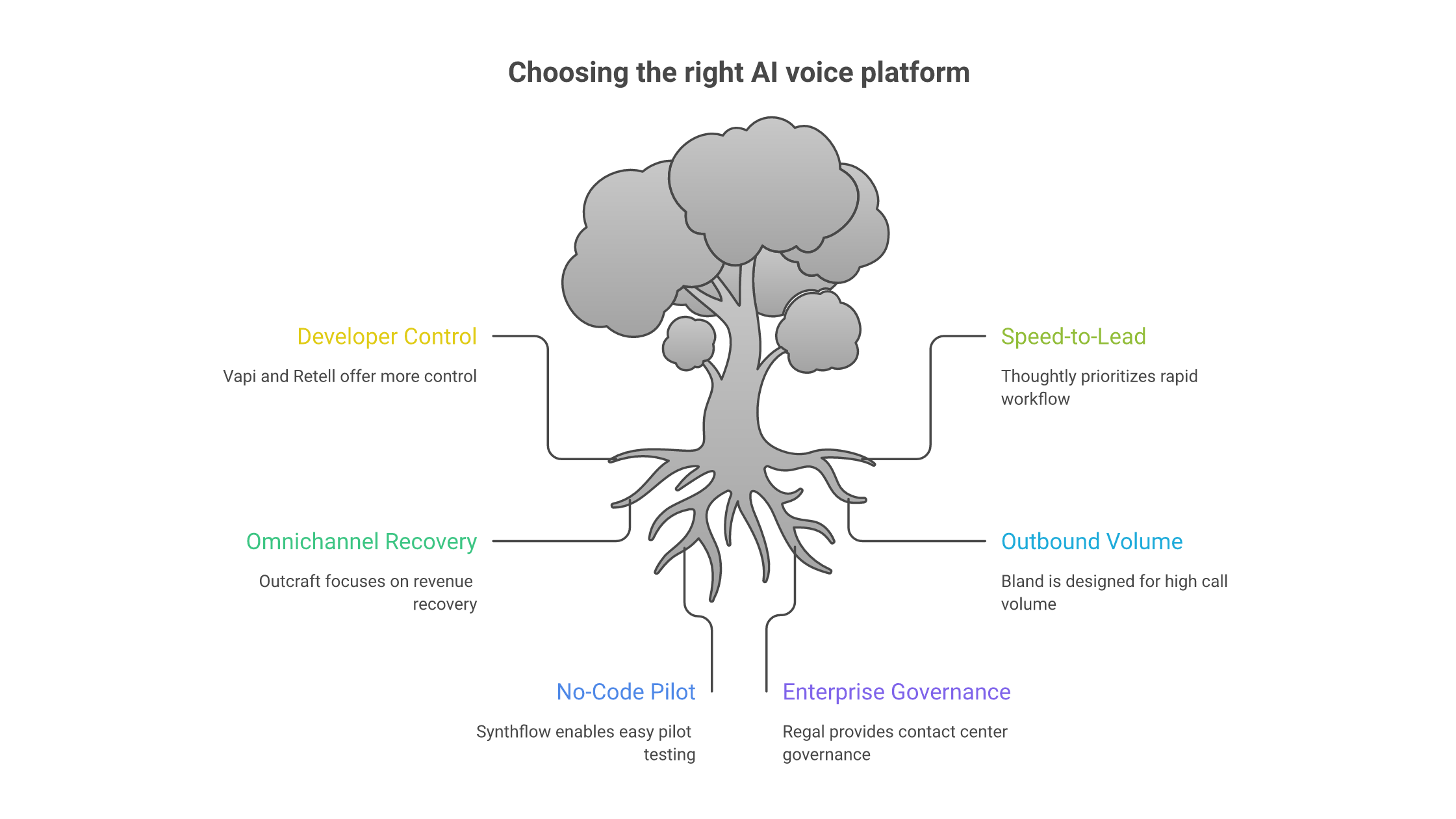
Pick the tool based on the revenue moment, not the demo voice.
If the problem is slow inbound response: choose Thoughtly or Outcraft. Thoughtly is stronger for lead conversion and CRM follow-up. Outcraft is stronger when the call needs to connect with SMS, email, and WhatsApp across a broader lifecycle.
If the problem is outbound call volume: choose Bland or Retell. Bland wins on all-in outbound pricing clarity. Retell wins when usage-based pilots and infrastructure flexibility matter.
If the problem is technical control: choose Vapi. It is the best fit when engineering wants to own the stack and integrate voice into a product or internal workflow.
If the problem is operator speed: choose Synthflow. It is easier for non-technical teams to configure appointment booking, qualification, and support calls.
If the problem is enterprise governance: choose Regal. It makes the most sense when call volume, compliance, and contact-center operating controls matter more than fast self-serve setup.
A tool like Outcraft AI is especially useful when the phone call is only the first move. If someone signs up, abandons checkout, misses a payment, or stops responding, the next best action may be a call, SMS, email, or WhatsApp follow-up. Judge the system by whether it moves the customer to the next outcome.
FAQs
What is the best AI voice agent for sales teams in 2026?
Retell AI is the best fit for usage-based voice infrastructure, Thoughtly is best for speed-to-lead workflows, and Outcraft AI is best when calls need omnichannel revenue follow-up across calls, SMS, email, and WhatsApp.
How much do AI voice agents cost?
Public pricing varies from Vapi's $0.05/minute hosting cost plus provider fees to Bland's all-in $0.11-$0.14/minute usage tiers. Quote-based tools such as Thoughtly, Outcraft, and Regal require sales contact.
Can AI voice agents replace SDRs?
They can replace repetitive first-touch calls, qualification, no-show follow-up, and simple recovery calls. They should not replace human reps for complex objections, high-value negotiations, or trust-heavy conversations without a human escalation path.
Which AI voice agent is best for non-technical teams?
Synthflow is the cleanest no-code option in this list. Thoughtly and Outcraft are also operator-friendly, but they are stronger when the workflow includes CRM or lifecycle follow-up, not just phone automation.
What should I test before buying an AI voice agent?
Pick one revenue moment this week, such as missed inbound calls or demo no-shows. Measure response time, qualified conversations, booked meetings, human escalations, opt-outs, and cost per useful outcome before expanding to more call types.