%20(1).svg)
Today's customers expect instant responses from ecommerce brands. The moment they land on your store, questions start coming in about availability, shipping, and returns.
Studies show that 92% of consumers want quick responses, and nearly 60% expect businesses to be available 24/7, regardless of time or location.
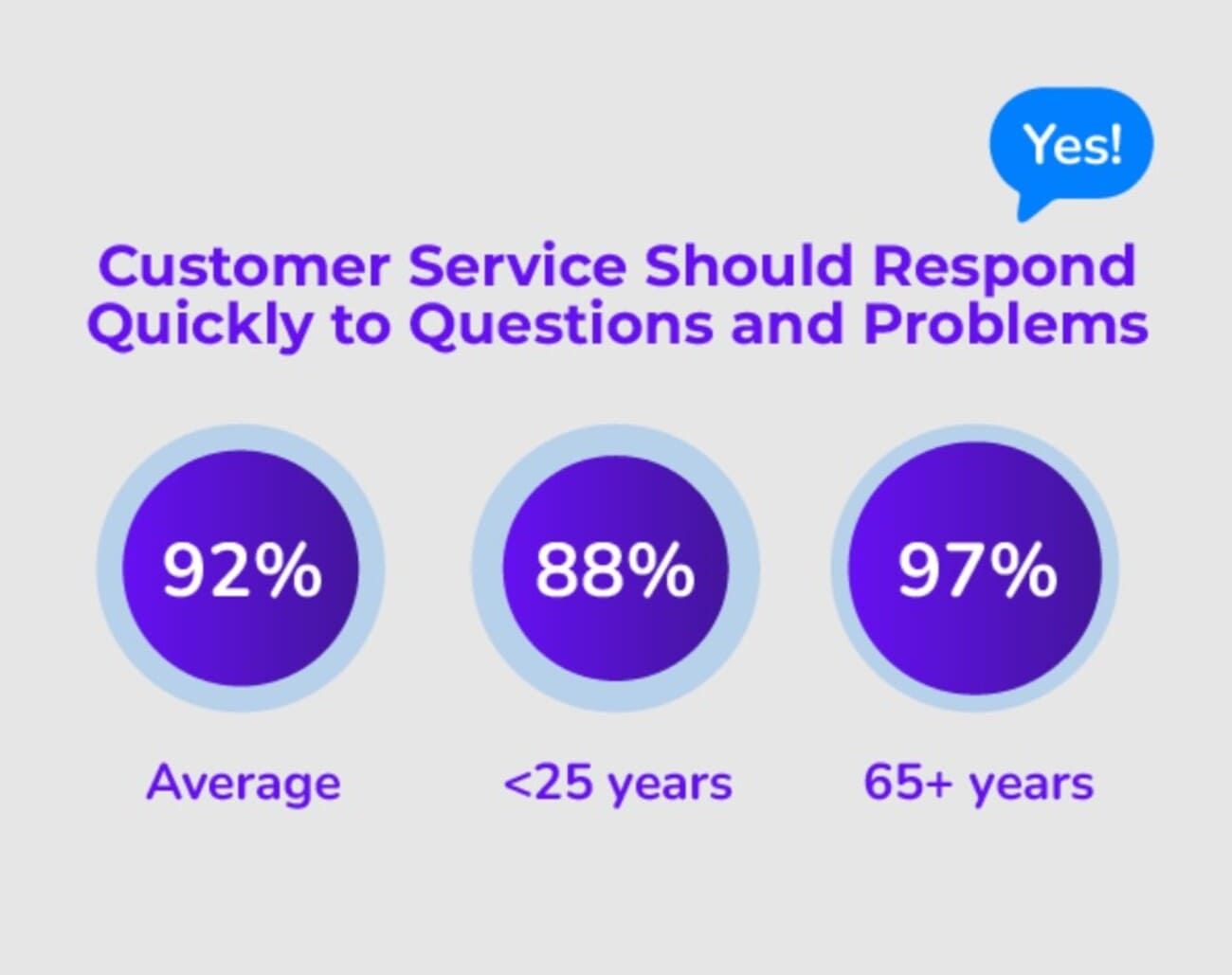
Image via CM.com
This creates a growing challenge for ecommerce teams. How do you meet constant customer demand without expanding support teams or burning out sales staff? That's where using conversational AI in ecommerce can help.
Read this post to understand what conversational AI is and how ecommerce brands are using it today. You'll also learn what to look for when choosing an AI solution that converts store visitors into paying customers.
What is Conversational AI?
Conversational AI can communicate with people in natural, human-like language. It relies on natural language processing (NLP), machine learning, and large-scale data models. So, it can recognize speech and text across different languages. It can also maintain context across conversations and generate relevant responses.
In ecommerce, conversational AI appears as virtual shopping assistants, AI chatbots, and voice-based ordering systems. These tools guide shoppers, recommend products, and resolve support requests. These also remember past interactions to deliver personalized experiences at scale.
Conversational AI in ecommerce can operate seamlessly across WhatsApp, web chat, email, SMS, and voice calls. It allows brands to meet customers wherever they prefer to engage.
This is a major reason many businesses are adopting the technology. Research shows that the global conversational AI market is projected to reach $41.39 billion by 2030.

Image via Grand View Research
Applications of Conversational AI in Ecommerce
Here's how ecommerce businesses use conversational AI to boost sales.
Personalized Shopping Help
Personalized shopping assistants are one of the most popular forms of conversational AI in ecommerce. They act as virtual sales agents. They remember customers' preferences, purchase history, and browsing behavior.
This data enables AI to answer questions, recommend products, and help customers make a buying decision.
With a personalized shopping assistant, customers don't have to scroll through your entire catalog. The AI asks clarifying questions and recommends relevant products.
This shortens the path to purchase, reduces decision fatigue, and improves conversions. It often leads to a higher average order value through upsells and cross-sells. Here's an example of an AI shopping assistant:
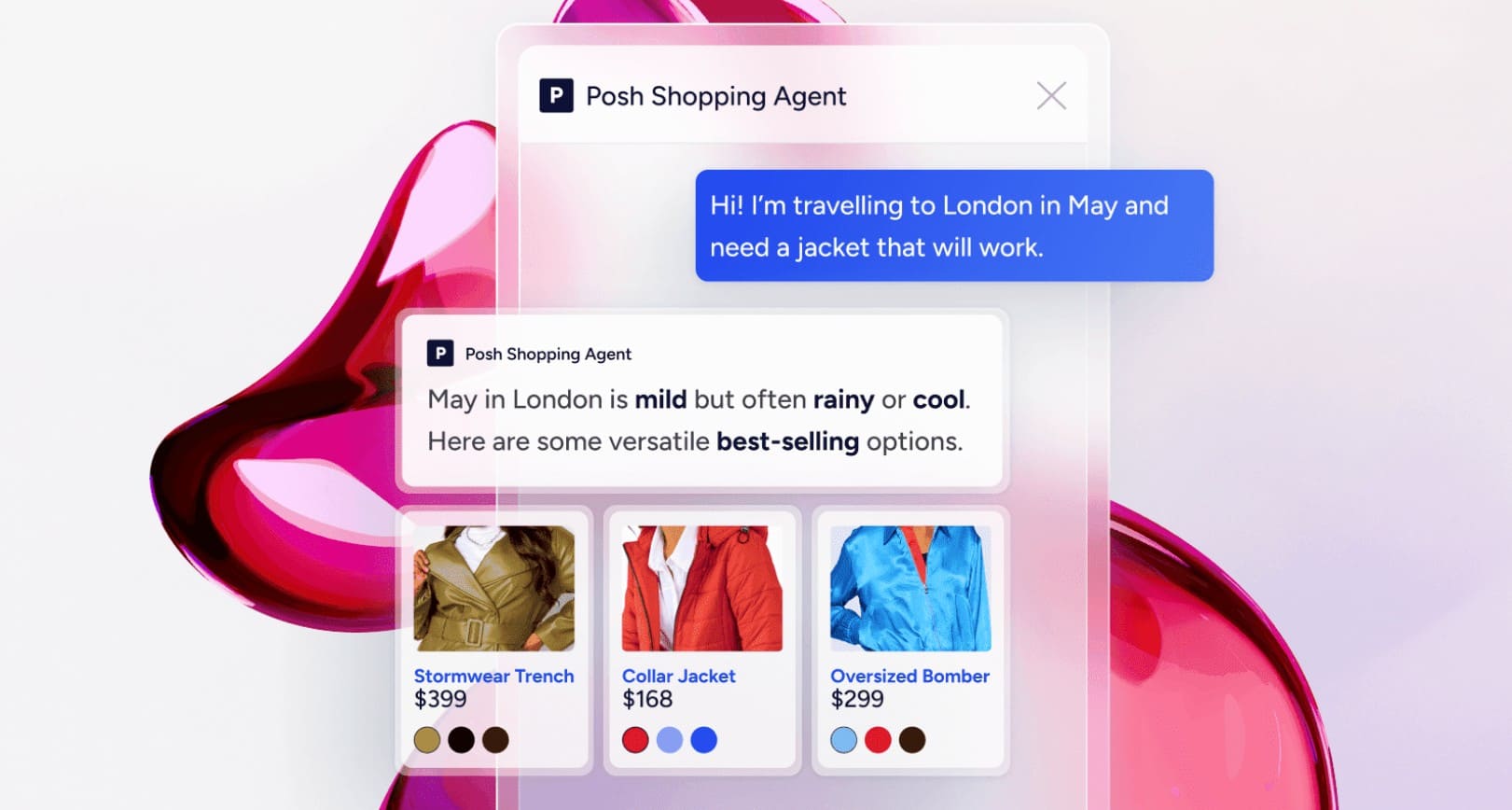
Image via Insider One
AI Customer Support
Another common use of conversational AI in ecommerce is to handle common inquiries. This includes order status, shipping timelines, and return policies. They don't send customers to your FAQ page. Instead, AI agents provide personalized responses that resolve issues quickly.
This removes hesitation in the buying journey. It also prevents drop-offs and cart abandonment. This often results in higher customer satisfaction scores (CSAT). Most importantly, it helps customers complete purchases without human support.
Checkout and Payment Processing
Checkout is where most ecommerce journeys break down. Customers hesitate, get distracted, or abandon carts due to long forms or unclear pricing. Conversational AI reduces this friction by turning checkout into a guided experience.
Voice and chat-based AI tools can walk customers through the entire purchase flow in real time. Shoppers can add items to their cart, apply discount codes, and complete payments smoothly. Talking with conversational AI reduces friction across the entire process.
This is effective on platforms like WhatsApp Pay. Customers can browse product catalogs and complete payments without ever leaving the chat interface. By using conversational AI in ecommerce, brands can eliminate unnecessary steps. They can meet customers where they already spend time.
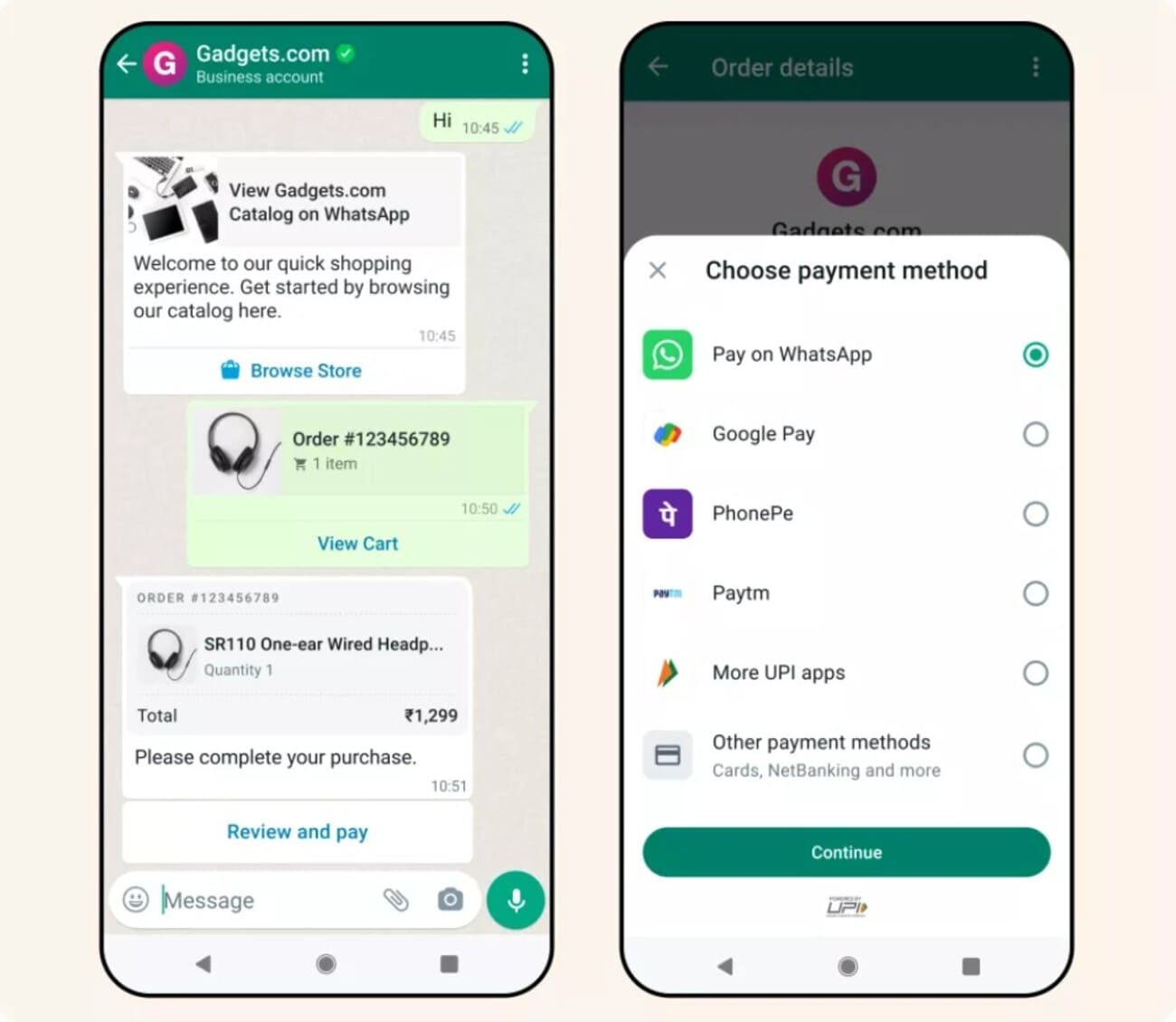
Image via Sinch
Post-Purchase Engagement
After the sale, AI agents can automatically handle order confirmations. They can also send shipping updates and provide support. Customers can initiate returns or exchanges through simple conversations. This avoids the need for filling out forms or sending emails.
AI can also collect product reviews using conversational prompts. This increases response rates and generates valuable social proof.
Such post-purchase conversations open the door to repeat purchases. This is because AI can recommend complementary products or offer timely upgrades.
These interactions are helpful and less promotional since they're grounded in real customer context.
Also Read:
Benefits of Using Conversational AI in Ecommerce
Here are some key benefits of using conversational AI in ecommerce.
Higher Sales Conversions
Every unanswered customer query is a potential lost sale. Conversational AI eliminates this risk by responding instantly when the buying intent is high.
It provides answers and personalized recommendations to customers on the page. This reduces friction and makes buying decisions easier for customers.
Conversational AI also keeps customers engaged during moments of hesitation. This includes cases when they have pricing concerns or shipping questions. It helps move them from intent to purchase.
This makes conversational AI a powerful tool for increasing sales conversion rates. This is because it actively supports decision-making rather than passively displaying information.
Lower Operational Costs
Conversational AI can manage thousands of customer interactions simultaneously. Routine inquiries like order tracking can be quickly resolved without human involvement. The best part is that using AI is more affordable than hiring human agents.
However, this doesn't imply that AI will replace jobs, as we still need experts to handle complex queries.
Actionable Insights Across the Sales Funnel
Every interaction with conversational AI generates data. It reveals what customers ask, where they hesitate, and what leads to purchases.
These insights can help you refine your messaging. It also helps optimize pricing and promotions and identify friction points in the buying journey.
Over time, conversational AI becomes a feedback engine. It can analyze conversations over time and identify trends. It helps your team understand what moves customers forward in the stages of the sales pipeline.
Better Customer Experience
Modern ecommerce customers value speed, availability, and relevance. Conversational AI delivers all three by offering real-time responses, 24/7. It also provides consistent support across channels.
This builds trust and reduces frustration, especially during checkout or post-purchase support needs. A smoother buying experience improves satisfaction and encourages repeat purchases. It also helps build long-term loyalty.
How to Choose the Right Conversational AI Tool for Ecommerce
Consider these factors when choosing conversational AI for your ecommerce business.
1. Sales Features
A conversational AI tool should support the entire customer journey, from discovery to checkout and post-purchase. It should have both chat and call functionalities. This allows customers to ask questions and buy without switching channels.
For example, Outcraft AI can handle objections and engage customers on multiple channels. It's also designed to move customers forward in their buying journey.
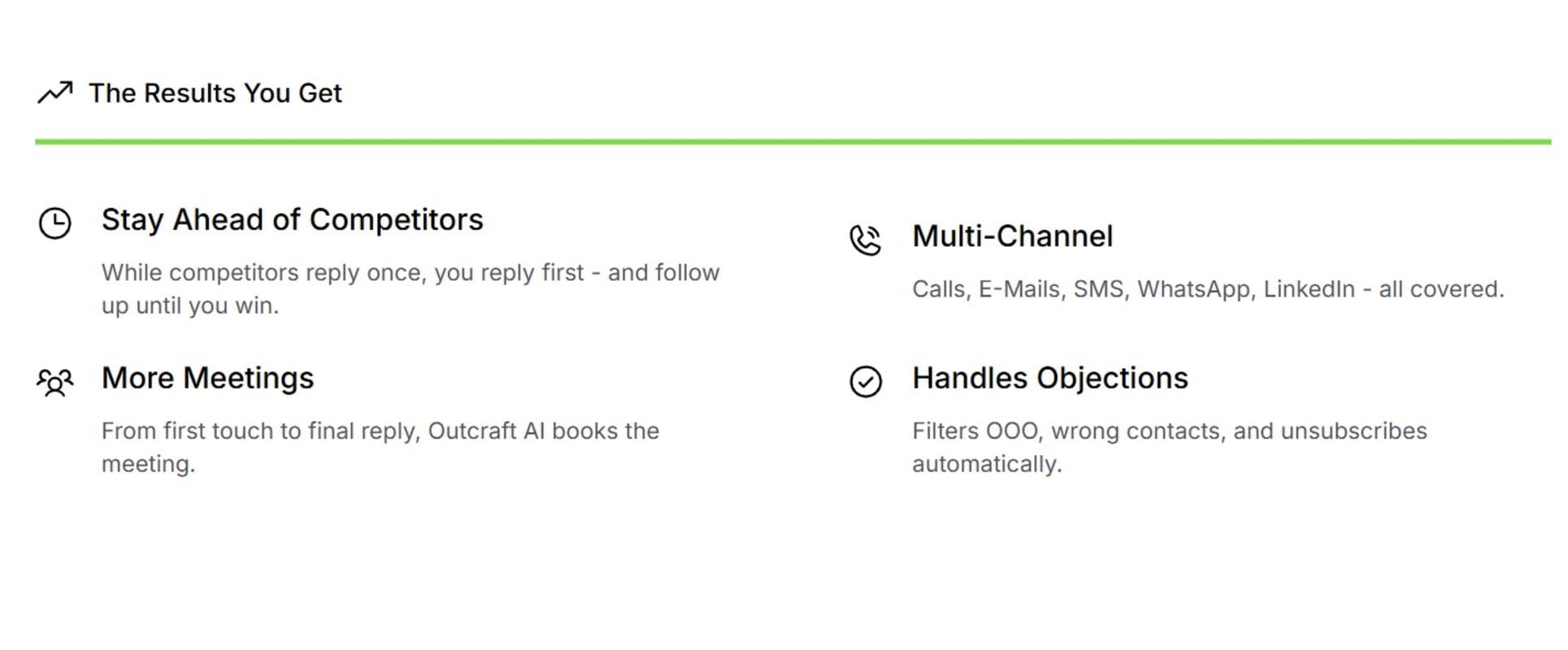
Image via Outcraft AI
2. Affordable Pricing
Pricing models vary widely across conversational AI platforms. Some tools charge per conversation, per agent, or per channel. These costs can quickly rise as traffic increases.
Instead of focusing on the cost, choose a conversational AI platform based on long-term value. It should boost sales conversions and customer lifetime value.
3. Integration With Your Ecommerce Tech Stack
Conversational AI is only as effective as the data it can access. So, it should integrate smoothly with your store, CRM, and order management tools. Outcraft AI, for example, connects to Gmail, Slack, Shopify, and Salesforce.
Additionally, the AI tool should be easy to deploy across multiple channels. These connections ensure that the AI responses aren't disconnected from the customer's context.
Also Read:
FAQ
1. What are some examples of conversational AI in ecommerce?
Some examples of conversational AI in ecommerce include:
-
AI shopping assistants
-
Chatbots handling order and shipping queries
-
Voice-based ordering systems
-
AI-powered checkout assistants
-
AI customer service agents for live chat and voice calls
2. Is ChatGPT a conversational AI?
ChatGPT is an AI language model designed to understand and generate human-like responses. However, on its own, it can't be used as conversational AI in ecommerce. It requires ecommerce integrations and workflows to support sales, checkout, and customer operations.
3. What are the applications of conversational AI in ecommerce?
The applications of conversational AI in ecommerce help brands convert and retain customers. They include:
-
Product discovery
-
Personalized recommendations
-
Customer support
-
Cart recovery
-
Order tracking and returns
-
Post-purchase engagement
Conversational AI in Ecommerce: The Shift From Support to Sales
Conversational AI in ecommerce is not limited to answering questions or resolving tickets. It can easily fit into your sales process. It will also help customers complete purchases through chat and voice interactions.
AI sales agents that can engage shoppers in real time, across channels, help businesses scale revenue. Modern tools like Outcraft AI can engage, qualify, and convert customers.
These tools don't replace human strategy or brand control. Instead, they ensure you're responsive at every stage of the customer's buying journey.
If you need AI sales agents to win more leads, try Outcraft AI. You can schedule a demo to explore its features and capabilities.

Summarize with AI