%20(1).svg)
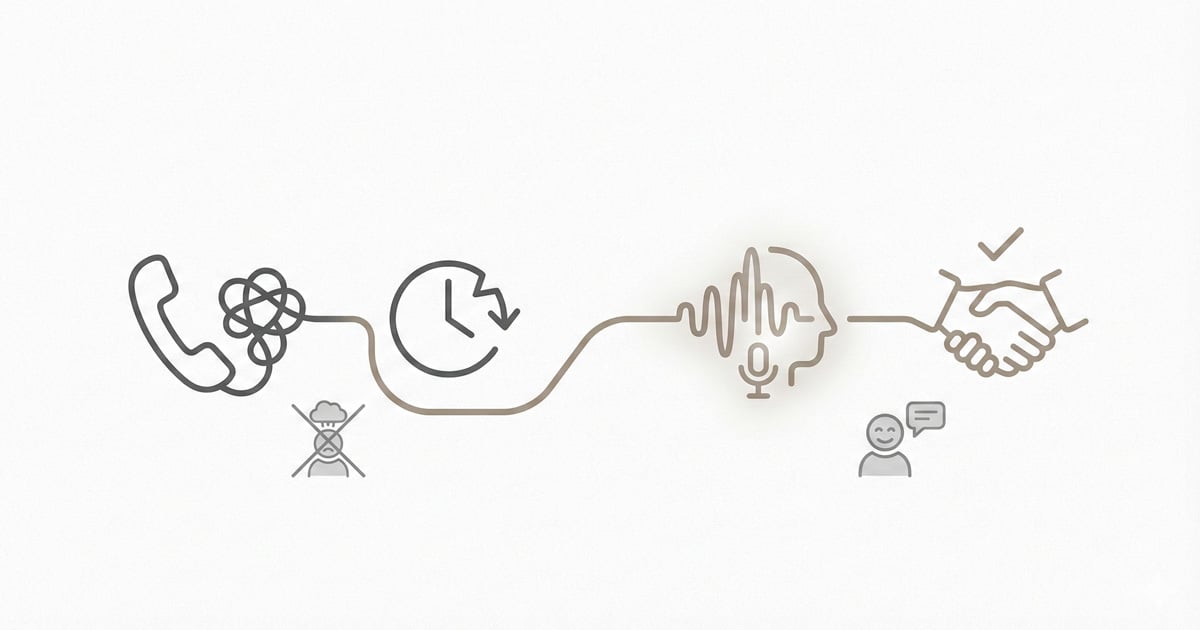
A potential customer calls your business, excited to learn more about your product, request pricing, or speak to a sales agent before making a decision. Then, they're greeted with hold music. Because they really want to hear from you, they decide to stay. One minute turns into five minutes, and their excitement fades into frustration.
With every passing second on hold, buying intent decays, and the likelihood of converting that caller reduces. When the caller eventually drops the call, that's lost revenue.
According to a Customer Patience Benchmark survey conducted by Nextiva, 54% of customers hang up after waiting for eight minutes. When this happens repeatedly, you're losing potential customers to competitors who respond on the first ring.
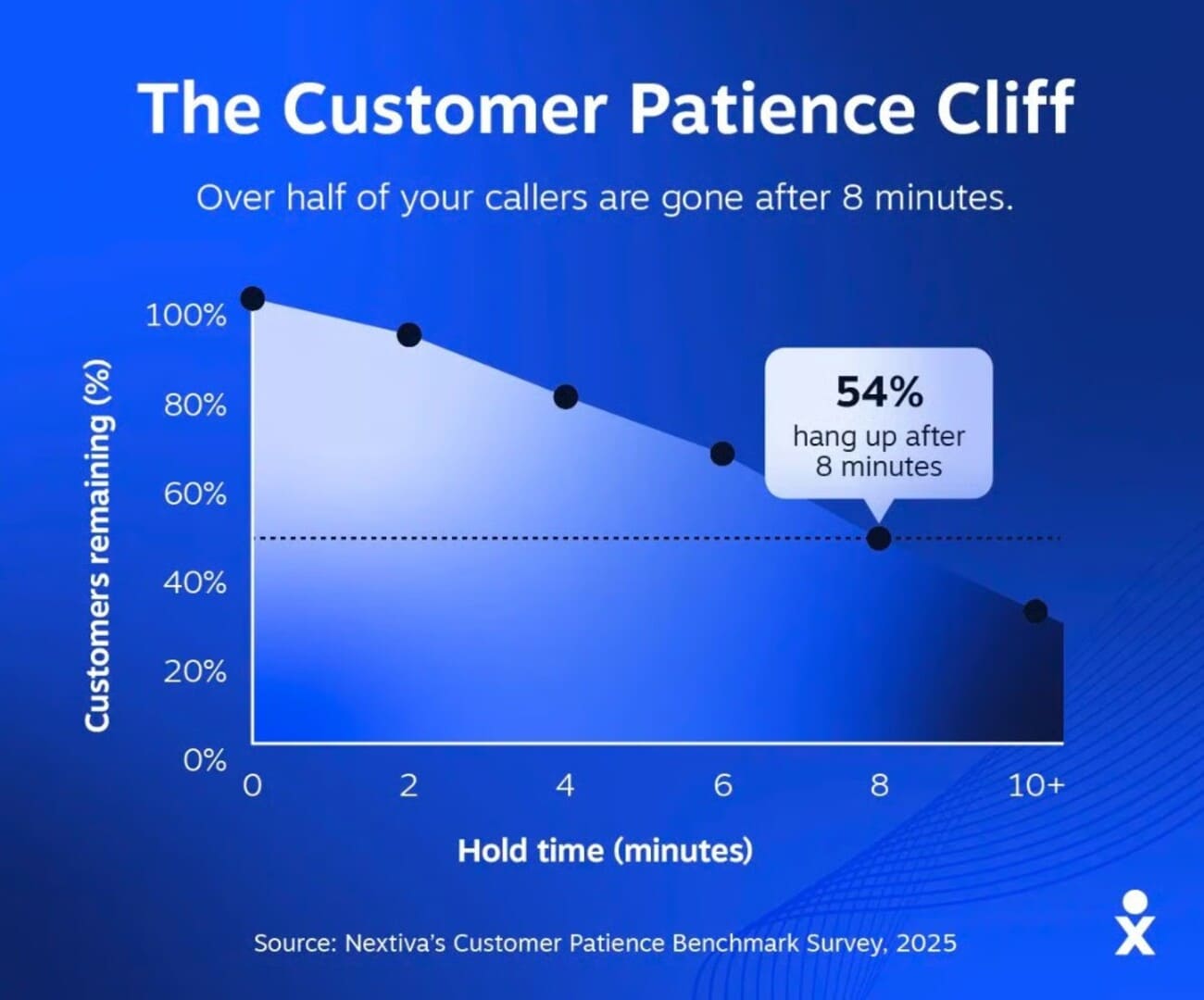
Image via Nextiva
That said, high call abandonment rates aren't caused by poor service alone. Limited agent availability, sudden call spikes, and overwhelmed support teams can also cause this. Learning how to reduce high call abandonment rates using AI voice agents could be a powerful solution to this challenge.
In this guide, you'll learn how call abandonment impacts your business and how AI voice agents can help you keep customers on the line.
What Is Call Abandonment?
Call abandonment is when a customer ends the call before they get a chance to speak with a support agent. It's measured as the percentage of inbound calls that disconnect before any interaction takes place.
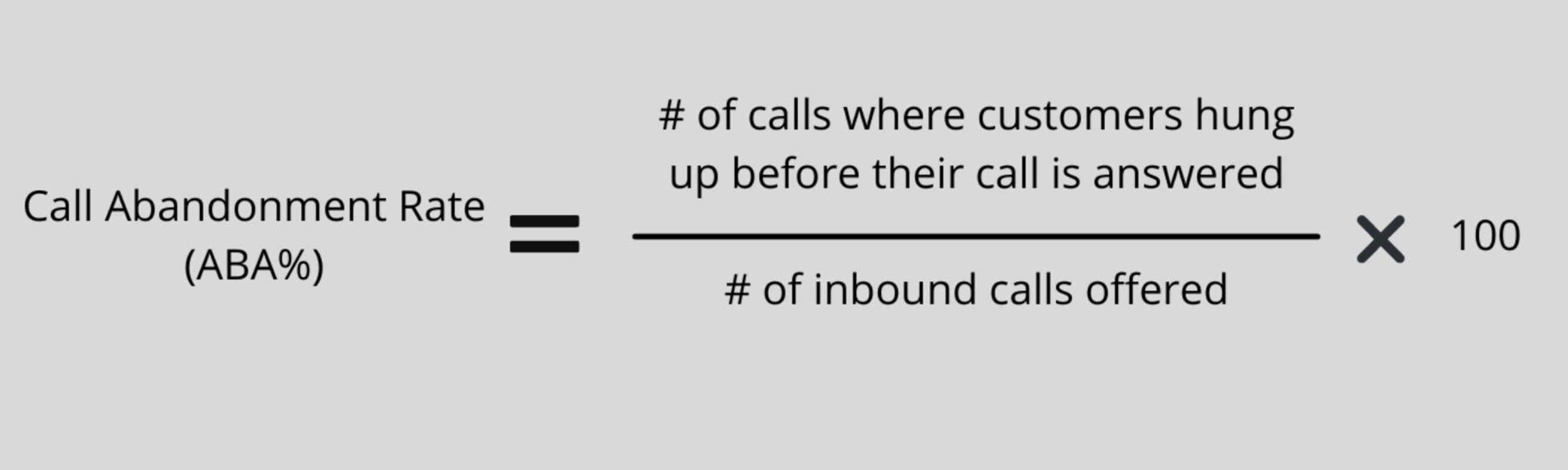
Image via Brightmetrics
For example, if your sales team receives 100 inbound calls in a day and 8 callers hang up while waiting, your call abandonment rate is 8%. If this happens in the early stages of the sales pipeline, it means you're losing prospects before you can even qualify them.
While a small amount of call abandonment is unavoidable, consistently high rates signal that your sales team is leaking revenue at the top of the funnel. The most common reasons why prospects drop off before conversion include:
-
Long Hold Times: Every minute a prospect spends on hold, their buying motivation decreases. When they feel no response is in view, they abandon the call.
-
Understaffed or Overloaded Teams: When there are more calls than available agents, it will take more time for prospects to get a response. This is especially common during peak inquiry periods after marketing campaigns or product launches.
-
Limited Availability: In sales, decision-makers often research your product and make calls during off-hours when they have uninterrupted time to focus. If prospects can't reach sales when they're ready to buy, you may be losing deals to competitors.
-
Poor Call Routing: Calls that are transferred multiple times can frustrate customers. Each additional handoff increases the resolution time and raises the likelihood of call abandonment.
-
Complex IVR Systems: Instead of a single menu, customers hear layers of options, such as sales, billing, and customer support. When the automated system can't understand voice commands or doesn't offer necessary options, customers simply give up.
One of the scalable ways to address these issues is learning how to use an AI voice agent. Despite the fear that AI will replace sales jobs, AI voice agents actually remove friction from the buying journey. They handle repetitive and time-sensitive interactions at scale.
This allows sales teams to focus on high-value conversations, such as closing deals and building relationships, instead of chasing missed calls.
How AI Voice Agents Reduce High Call Abandonment Rates
A high call abandonment rate signals that customers aren't getting the help they need when their intent is high. Here's how AI voice agents can help reduce call abandonment.
Instant Answer, Every Single Time
An effective way to reduce call abandonment is by eliminating the wait. AI voice agents answer calls instantly, removing uncertainty and preventing disengagement before the conversation even begins.
Modern AI platforms engage prospects across voice, SMS, and follow-up channels, ensuring inbound leads are captured and qualified in real time. Outcraft AI is a great AI sales tool that implements this approach, helping sales teams convert more inbound demand.
It also helps increase sales conversion rates by keeping prospects engaged in each stage of the sales process.
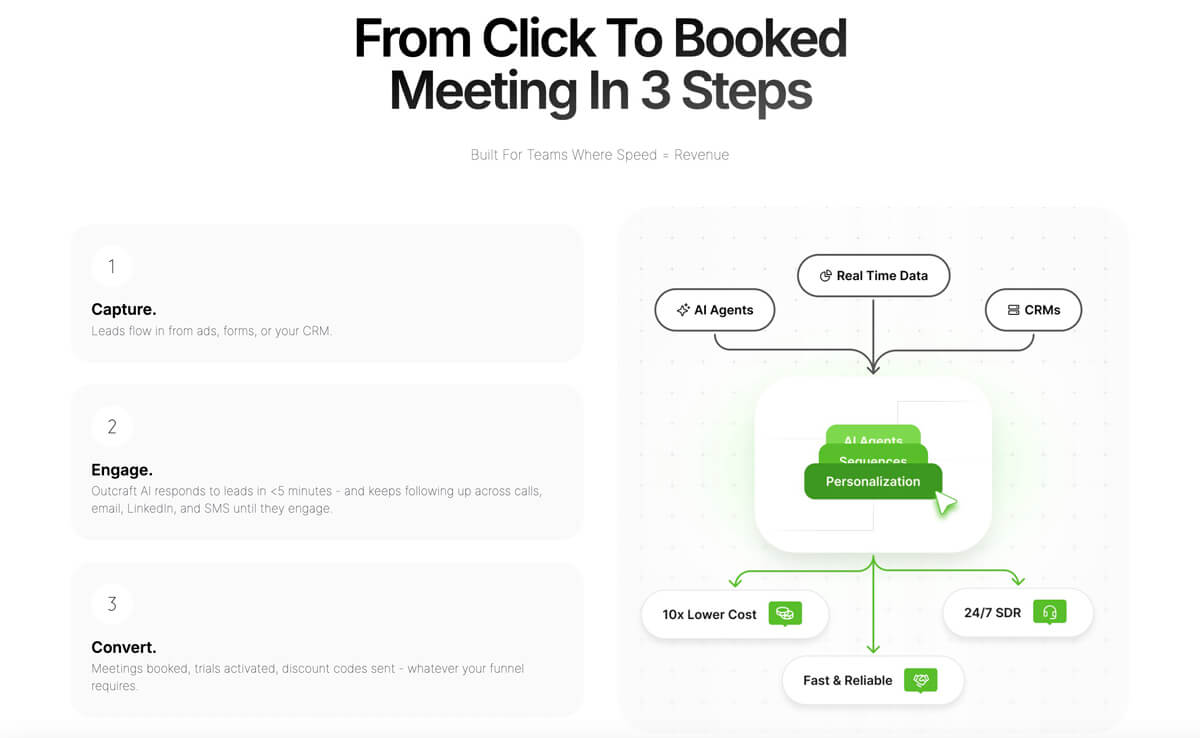
Image via Outcraft AI
24/7 Availability Without Extra Staffing
Your human agents need sleep, weekends, and holidays, but you should be ready when your prospect makes buying decisions. Someone could be researching solutions at 10 PM on a Saturday, ready to place an order for Monday delivery. If so, you should be able to answer their queries.
AI voice agents operate 24/7, ensuring inbound sales calls are answered right away. This way, you don't miss out on high-intent prospects simply because they want to reach out outside business hours.
Constant availability changes how customers perceive your commitment to serving them. When buyers can reach you anytime, your brand becomes synonymous with accessibility.
Smart Lead Qualification and Call Routing
AI agents understand natural language and respond dynamically. Callers can speak freely, unlike IVR systems that rely on keywords or preset menus. They can also handle common inquiries like pricing tiers, feature comparisons, and demo scheduling.
When the caller's request requires human involvement, such as custom plans or negotiations, the AI qualifies the lead first. It gathers information about their company size, budget range, timeline, decision-making authority, and specific needs.
Then, it routes the call to the right sales specialist, providing complete context so they don't have to start from scratch. This prevents unnecessary transfers and improves lead quality, leading to better sales conversions.
Intelligent Callback Management
Even with AI providing immediate responses, there will be moments when your sales staff is catering to another client. For such scenarios, AI voice agents offer an intelligent callback system. Example verbiage can be, "I can connect you with a specialist, but there's a wait time, or I can have someone call you back later. Which would you prefer?"
Prospects who choose callbacks can move on instead of staying stuck on the line. Even better, the AI manages the callback queue dynamically and provides the necessary context so agents can jump straight into solving the problem.
Also Read:
Best Practices to Reduce High Call Abandonment Rates in Sales
Follow these implementation steps to get maximum results from AI voice agents.
Automate Repetitive Tasks
Start by automating the most frequent inbound sales questions. Calls about demos, pricing, or enterprise features don't require your senior sales talent. Such prospects need quick, accurate information — even if it comes from an AI.
When you automate these inquiries, you free your sales team for actual selling conversations that increase conversion rates. You're also giving prospects faster answers that keep them moving through your sales funnel.
Train AI on Your Sales Process and Product
AI voice agents are efficient when you train them on your specific products, sales methodology, and value propositions. This ensures callers receive correct responses quickly. That's why you need to feed real sales conversation data to your AI.
Review call recordings from top performers and analyze common prospect questions. Identify the language successful deals used versus those that stalled. Your AI should also know feature sets, pricing tiers, integration capabilities, implementation timelines, ideal customer profiles, and common use cases.
Monitor and Optimize Call Data
Track call abandonment by segment to understand where revenue is leaking. Compare after-hours vs. business-hour calls, prospects vs. existing customers, and other meaningful groups. This allows you to optimize coverage where intent is highest.
Run experiments on sales messaging and lead qualification approaches. Test different ways the AI presents your value proposition, then try varying the qualification questions. A small change in how your AI describes your competitive advantage might boost prospect engagement and conversion.
FAQ
1. How can you reduce a high call abandonment rate?
You can reduce the high call abandonment rate with AI voice agents. They provide 24/7 availability and manage callbacks intelligently. Tools like Outcraft AI respond in a few minutes and follow up until the prospect is ready to convert.
2. What is the 10-20-70 rule for AI?
The 10-20-70 rule for AI suggests that 10% of success comes from technology, 20% from data and processes, and 70% from people. It shows that AI impact depends more on training staff to use AI and designing workflows to ensure that inbound calls convert into revenue.
3. What are the 3 C's of customer satisfaction?
The 3 C's of customer satisfaction are consistency, convenience, and care. Customers expect reliable experiences, easy access to support or sales, and genuine attention to their needs. Meeting all three builds trust, loyalty, and higher conversion rates.
Also Read:
Reduce Call Abandonment and Convert More Inbound Sales Calls
High call abandonment rates hurt customer experience and quietly drain your sales pipeline. Every unanswered call is a missed opportunity to engage a high-intent prospect. However, AI voice agents can help you answer calls faster, so prospects get the right responses that move them further into the buying journey.
Now that we've shown you how to reduce high call abandonment rates with an AI voice agent, it's time to implement it. Using a tool like Outcraft AI can help you improve lead engagement, qualification, and conversions. Book a demo today to see how Outcraft AI turns inbound demand into revenue.

Summarize with AI